61 Kaki Bukit Ave 1, #01-09, Singapore 417943
 +65 6841 0661
Commercial Reinstatement in Singapore: Save More by Turning Your Scrap into Savings
Planning a commercial reinstatement in Singapore? Learn about lease requirements, typical costs, and how scrap metal recovery can reduce your total expenses.
Ending a commercial lease in Singapore involves more than simply moving out. Most tenancy agreements contain a reinstatement clause that requires tenants to return the premises to its original condition before handing it back to the landlord.
Depending on the type of property, this may involve removing partitions, flooring, built-in fixtures, signage, electrical installations, plumbing additions, or specialised equipment. Failure to meet reinstatement requirements can result in disputes, delays in handover, or deductions from your security deposit.
This guide explains how commercial reinstatement works in Singapore, typical costs involved and how scrap metal recovery can help reduce overall project expenses.
What Is Commercial Reinstatement?
Commercial reinstatement refers to the process of restoring a leased commercial property to the condition specified in the tenancy agreement before it is returned to the landlord.
In most cases, tenants are required to remove any alterations, fixtures, fittings, and installations made during their tenancy. The objective is to return the premises to a “bare shell” condition or the original state documented when the property was first handed over.
What the Reinstatement Clause Requires
Every lease is different, but most commercial reinstatement clauses in Singapore share a common set of obligations. Before engaging any contractor, review your lease carefully — specifically the reinstatement or restoration clause — and cross-reference it with the original handover condition report.
Typical requirements include:
- Removal of all tenant-installed fixtures, fittings, and furniture
- Dismantling of partitions, false ceilings, raised flooring, and built-in structures
- Removal of all electrical and data cabling added during tenancy
- Removal of plumbing additions, including grease traps in F&B units
- Patching, plastering, and repainting walls to original colour
- Restoring or removing tenant-installed flooring
- Removing all signage, branding, and external modifications
- Returning the space clean, empty, and ready for landlord inspection
Tenants who made significant structural modifications, specialist M&E installations, or major fit-out works during their tenancy will generally have more extensive reinstatement obligations.
Estimated Reinstatement Costs in Singapore
Reinstatement costs in Singapore vary considerably depending on the size of the space, the extent of modifications during tenancy, and the type of premises. The following are general estimates for reference — actual costs are always site-specific.
| Premises Type | Typical Size | Estimated Cost Range |
|---|---|---|
| Retail shophouse / HDB unit | 300–600 sqft | $2,000 – $6,000 |
| Mall retail unit | 500–1,500 sqft | $4,000 – $15,000 |
| Office space | 1,000–5,000 sqft | $6,000 – $30,000 |
| F&B restaurant / café | 800–2,500 sqft | $8,000 – $25,000 |
| Warehouse / light industrial | 2,000–10,000 sqft | $10,000 – $50,000 |
| Factory / heavy industrial | 5,000 sqft+ | $30,000 and above |
Most tenants hire separate contractors for disposal, haulage, and reinstatement — paying full price at every step. At Choon Sheng Hardware Trading, we offer something different: a seamless, all-in-one service that covers disposal, scrap metal recovery, and reinstatement under one roof. Because we buy back the scrap metal and reusable materials from your site, we can offset your reinstatement costs significantly.
Also Read: 7 Challenges of E-Waste Recycling in Singapore and How to Solve Them
How the Reinstatement Process Works
A commercial reinstatement project follows a defined sequence. Understanding this helps tenants plan their timeline and avoid the most common and costly mistakes.
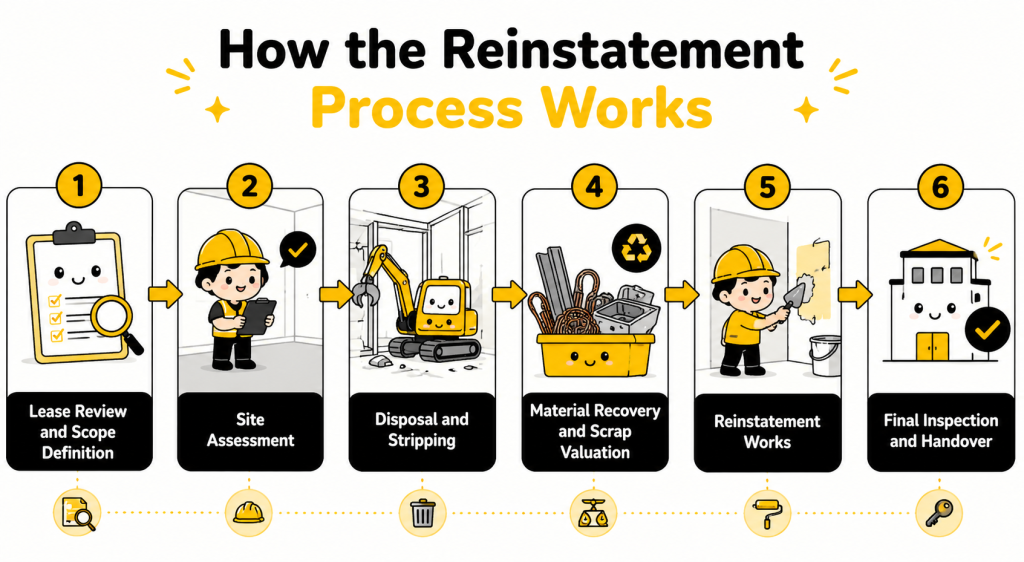
1. Lease Review and Scope Definition
Before any physical work begins, the reinstatement scope should be mapped against the lease requirements and the original handover condition report. Most disputes between tenants and landlords arise from scope disagreements — knowing exactly what is required from the outset prevents surprises at the handover inspection.
2. Site Assessment
A physical inspection allows the contractor to assess the volume of work, identify materials that require specialist handling, estimate scrap recovery value, and provide an accurate itemised quote — including the net cost after any scrap offset.
3. Disposal and Stripping
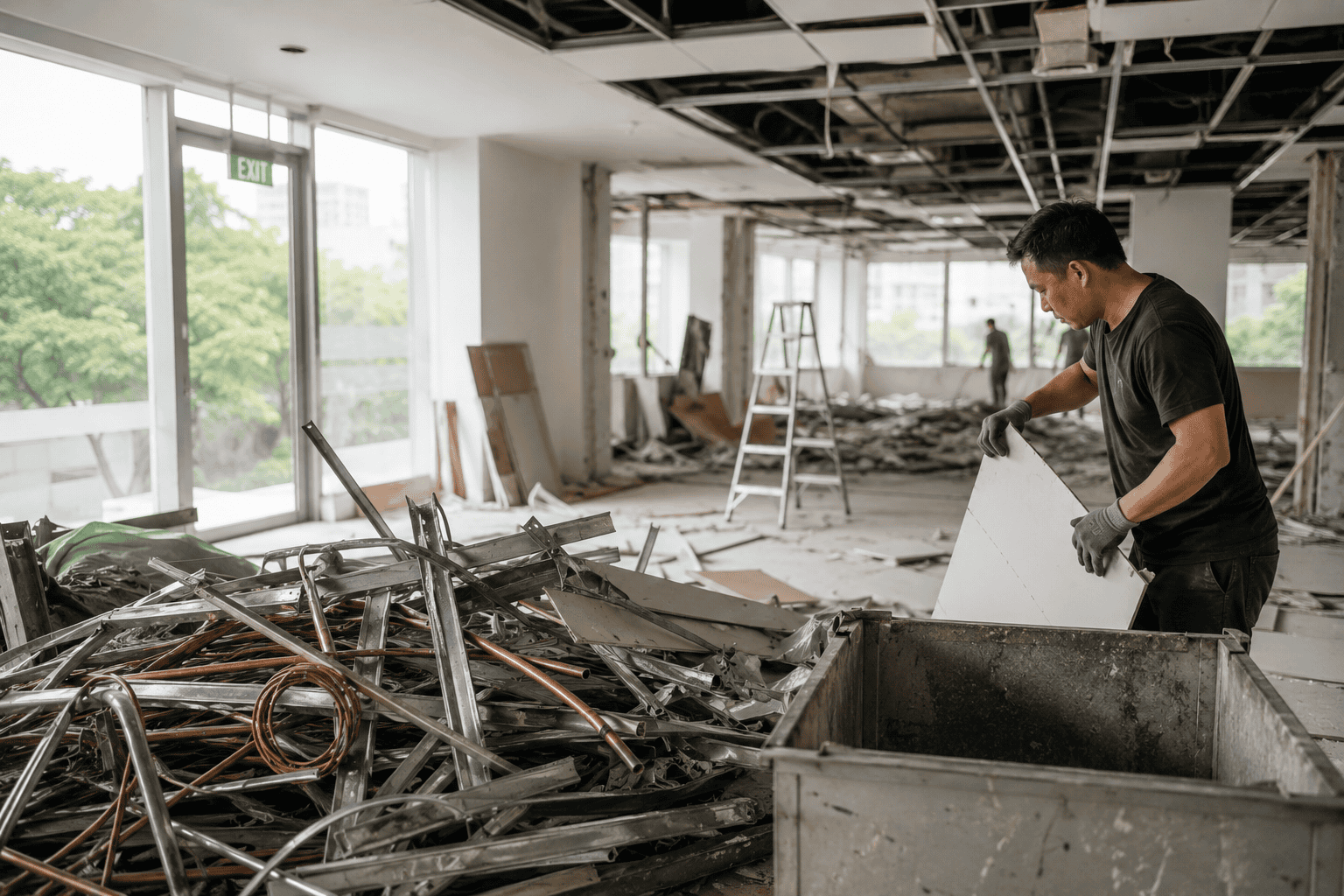
The first phase of physical works involves stripping out all fixtures, fittings, equipment, and built-in structures. This is typically the most labour-intensive phase, particularly for F&B units with commercial kitchen equipment or offices with extensive partition systems.
4. Material Recovery and Scrap Valuation
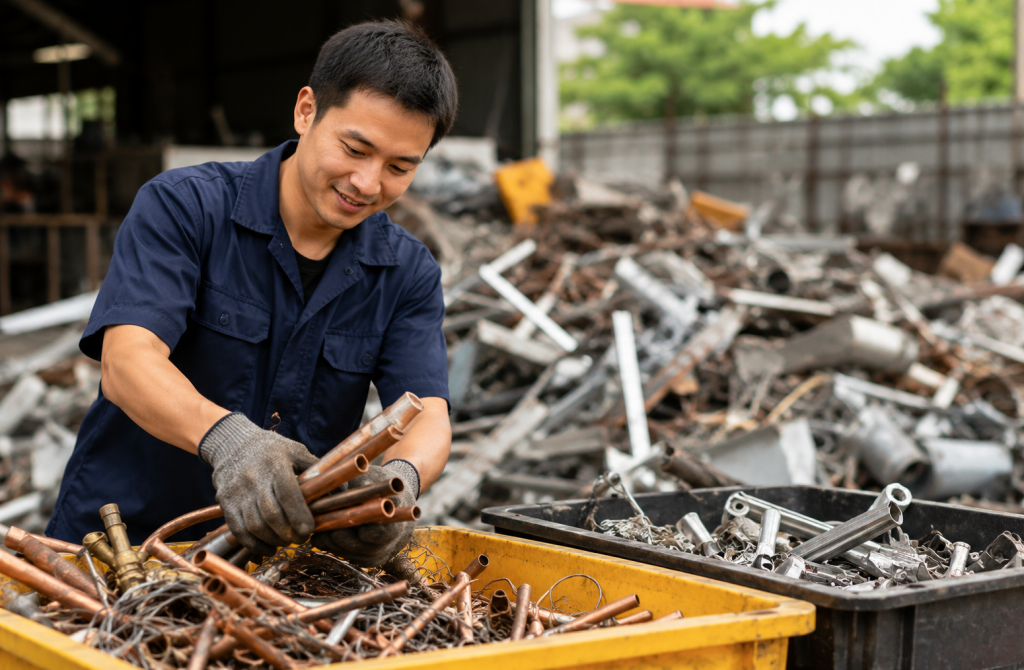
During stripping, recoverable materials — copper wiring, stainless steel equipment, aluminium frames, steel structures, and cables — are identified, separated, and weighed. These materials have commodity value that can be applied directly against the reinstatement bill, reducing what the tenant ultimately pays.
5. Reinstatement Works
After disposal and material recovery, the actual reinstatement work begins: patching walls, plastering, repainting, restoring or removing flooring, and returning the space to the condition specified in the lease.
6. Final Inspection and Handover
Once works are complete, a final inspection is conducted — ideally with the landlord or their representative present — to verify compliance before keys are returned. A pre-handover walkthrough is advisable to identify and address any deficiencies before the formal inspection.
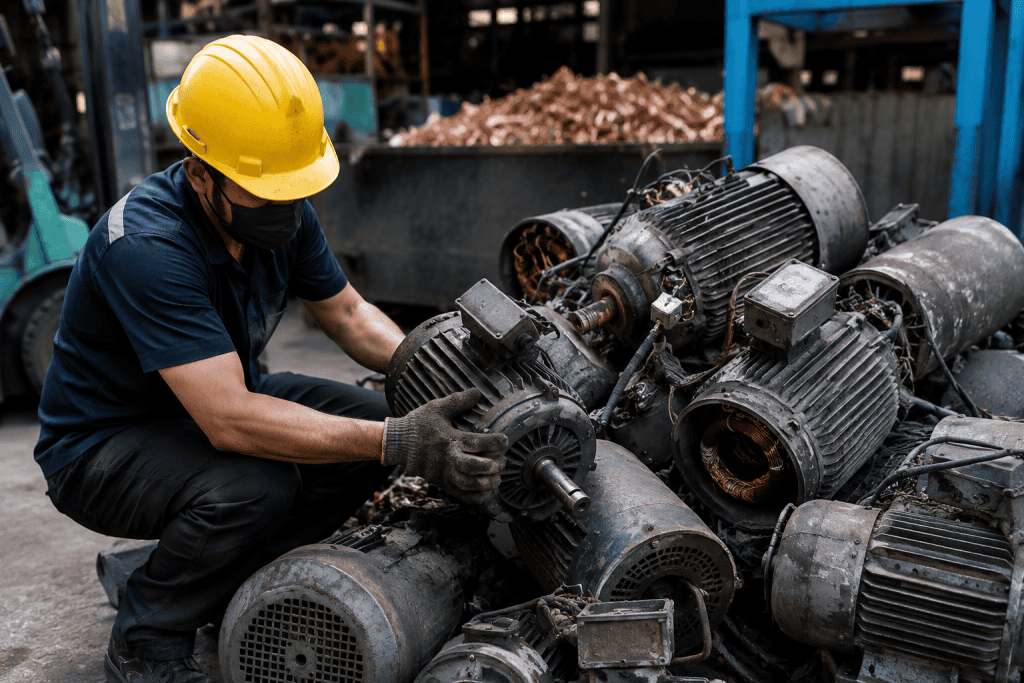
Also Read: Sell Industrial Motors Singapore: Get the Best Scrap Value (2026 Guide)
What Materials Have Scrap Value During Reinstatement
One aspect of commercial reinstatement that most tenants overlook is the commodity value of materials stripped out during the disposal phase. Rather than treating everything as waste, experienced contractors identify and separately recover materials that can be sold as scrap.
| Material | Common Sources in Commercial Premises | Scrap Potential |
|---|---|---|
| Copper | Electrical wiring, plumbing pipes, air conditioning piping | High |
| Stainless steel | Kitchen equipment, sinks, counters, railings, prep tables | High |
| Aluminium | Window frames, ceiling grids, HVAC ducts, cladding | Medium |
| Steel | Racking systems, mezzanine floors, structural supports, doors | Medium |
| Brass | Plumbing fittings, valves, taps, door hardware | Medium |
| Cables | Power cables, data cables, networking infrastructure | Medium |
| Equipment | Air conditioners, motors, generators, commercial appliances | Case-by-case |
The actual recovery value depends on current commodity market rates — primarily copper and steel — and the quantity of each material on site. For premises with significant M&E installations, commercial kitchens, or steel structures, the total scrap value can be substantial.
How Scrap Recovery Reduces Your Reinstatement Bill
The traditional approach to commercial reinstatement separates disposal from reinstatement entirely. A tenant pays a disposal contractor to strip and remove everything, a haulier to take it away, and a reinstatement contractor to complete the restoration. All the copper, stainless steel, and aluminium that comes out of the premises is either dumped or scrapped by the disposal contractor — with the tenant receiving none of that value.
An alternative approach, offered by Choon Sheng Hardware Trading, combines all three stages under one workflow. As both a scrap metal buyer and a dismantling and disposal specialist, materials recovered during the stripping phase are weighed, valued at current market rates, and offset directly against the reinstatement invoice.
In practical terms, this means:
- Tenants pay the net difference between the reinstatement cost and the scrap recovery value
- There is no need to coordinate multiple contractors
- The timeline is faster because disposal, recovery, and reinstatement happen in sequence under one team
- In cases where scrap recovery value exceeds the reinstatement cost, the difference is paid to the tenant
This model is particularly effective for F&B premises (high stainless steel and copper content), warehouses and factories (large volumes of steel racking and structural steel), and offices with extensive M&E installations.
The Smarter Way to Handle Your Commercial Reinstatement at CS Hardware
Commercial reinstatement does not have to mean paying full price at every stage. The copper wiring, stainless steel equipment, aluminium frames, and steel structures coming out of your premises all have real commodity value — and with the right contractor, that value comes back to you. Most tenants pay a disposal contractor, a haulier, and a reinstatement contractor separately, receiving nothing in return for the materials stripped from their own space.
Choon Sheng Hardware Trading combines disposal, scrap metal recovery, and full reinstatement works under one team and one invoice. We buy back the recoverable materials from your premises at current market rates and deduct that value directly from your reinstatement bill — reducing your net cost without adding complexity. For a free site assessment and transparent quote, contact us today.
Frequently Asked Questions About Commercial Reinstatement
How much does commercial reinstatement cost in Singapore?
Costs depend on the size of the premises, scope of works, and materials involved. A typical retail shop reinstatement might range from $3,000 to $15,000, while larger commercial or industrial spaces can be significantly more. At Choon Sheng, the scrap metal and materials we recover during disposal are offset against your bill, reducing your net cost.
How long does reinstatement take?
A small retail shop can be completed in 3-5 days. Office spaces typically take 1-2 weeks. Larger commercial or industrial premises may take 2-4 weeks depending on complexity. We provide a timeline estimate during the free site assessment.
What does a reinstatement clause require?
Most commercial leases in Singapore require the tenant to return the premises to the original condition at the start of the lease (bare shell or as per the handover condition report). This means removing all tenant-installed fixtures, fittings, modifications, and restoring walls, floors, and ceilings.
Can you handle F&B kitchen equipment disposal?
Yes. We frequently handle F&B reinstatement including removal of commercial kitchen equipment, exhaust systems, grease traps, cold rooms, and all stainless steel fixtures. The high stainless steel and copper content in F&B equipment means excellent scrap offset value.
Do you handle the entire process or just disposal?
We handle everything — from initial disposal and scrap recovery through to final reinstatement and handover. One contractor, one timeline, one invoice. No need to coordinate multiple vendors.
What if the scrap value exceeds the reinstatement cost?
In cases where the recovered scrap metal and materials are worth more than the reinstatement works, we pay you the difference. This can happen with premises that have large amounts of copper, stainless steel, or heavy steel structures.