61 Kaki Bukit Ave 1, #01-09, Singapore 417943
 +65 6841 0661
How to Recycle Old Appliances in Singapore: The Complete E-Waste Guide
Learn how to dispose of old appliances properly in Singapore. Discover e-waste recycling centers, bulky item pickup options, and safe handling tips.
When a toaster stops heating properly or a microwave no longer turns on, the first question is usually where it should go next. In Singapore, old appliances are not all handled the same way. Some qualify as electronic waste, while larger items may need a separate collection route.
Knowing the difference matters because it helps you dispose of old appliances properly, avoid illegal dumping, and use the right recycling channel from the start. It also makes the process faster if you are clearing a flat, replacing home appliances, or managing disposal for a business.
Understanding the correct disposal method can also support safer recycling practices and help ensure that electronic waste is managed responsibly across Singapore. Learn how to recycle old appliances in Singapore and dispose of e-waste responsibly with the right recycling and collection methods.
Common Household Electronic Waste
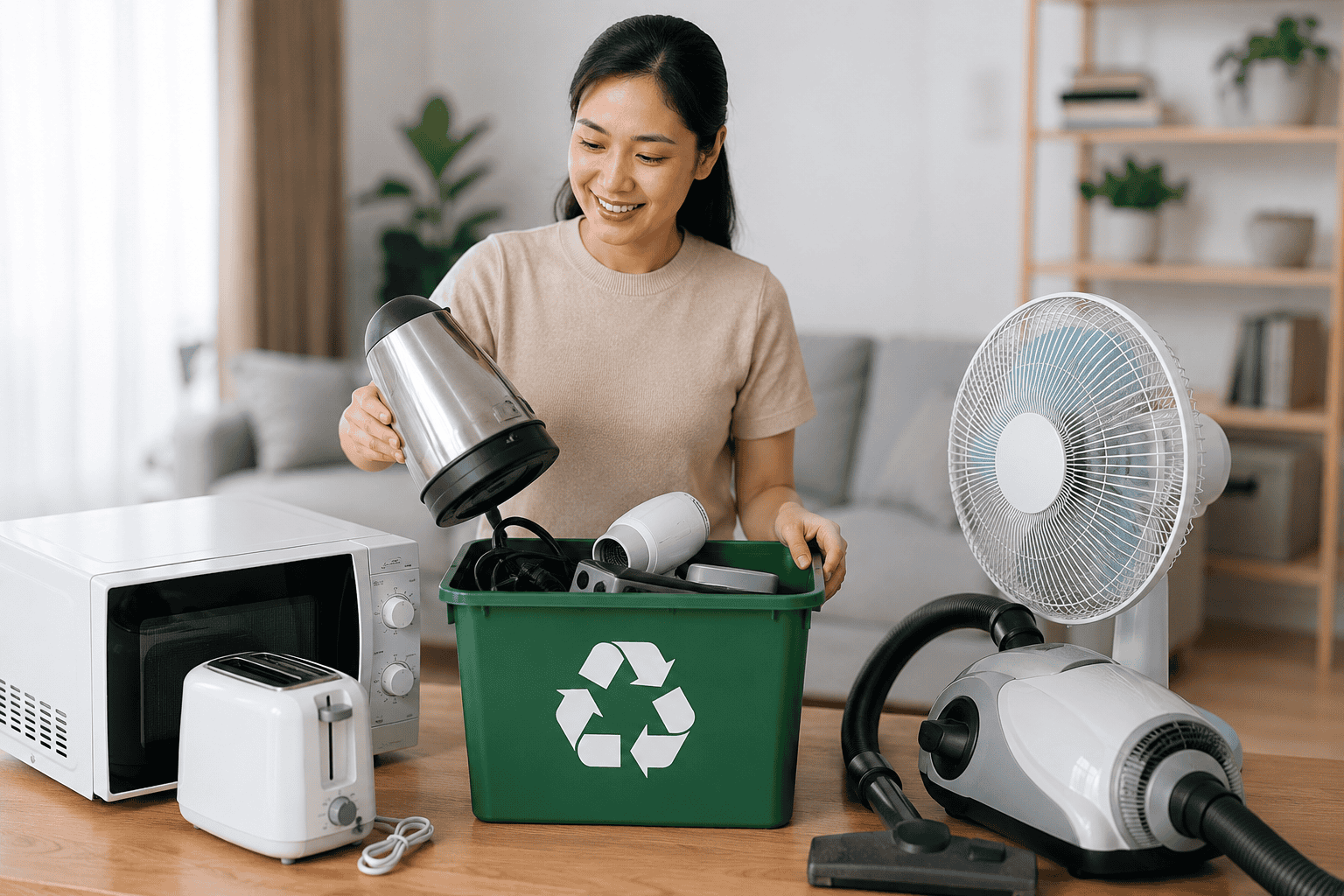
Electronic waste in Singapore includes appliances with electrical components that are no longer working or are no longer needed. Common examples include:
- Microwaves
- Toasters
- Kettles
- Hair dryers
- Irons
- Other small household appliances
These items can usually be sent to an e-waste recycling center or placed in approved recycling bins, depending on size and local collection rules.
Items That Do Not Belong in E-Waste Bins
Very large appliances often do not fit in standard e-waste bins. Refrigerators, washing machines, dryers, and similar bulky white goods usually need bulky item pickup recycling or a special removal service.
If an item is damaged beyond use, do not leave it at the HDB bin centre or void deck unless your Town Council has arranged collection for it.
Safe Handling Before Recycling
Safe handling before recycling helps protect the people moving the item and keeps the recycling process clean and efficient. Before dropping off or booking pickup, unplug the appliance and make sure it is empty, dry, and easy to move. If you are unsure whether an item is accepted, check the NEA guidelines or the ALBA e-waste recycling program before bringing it out.
How to Recycle a Microwave Safely
If you are looking for how to recycle a microwave, start by removing any food residue and wiping the inside clean. Unplug the unit, secure the door, and avoid opening the casing yourself. Microwaves contain electrical parts, so they should go through approved appliance e-waste disposal routes rather than general refuse.
How to Recycle a Refrigerator Responsibly
To recycle a refrigerator responsibly, empty all contents first and defrost the unit before collection. Wipe away excess water so it can be moved safely. Because a fridge is bulky and heavy, it is usually better suited to bulky item pickup recycling or a designated removal service rather than a standard drop-off bin.
Also Read: Singapore Scrap Metal Price Guide: Current Rates & Values (2026)
How to Dispose of Old Appliances Properly
The right disposal method depends on the appliance size, how it is built, and whether it can be carried to a collection point.
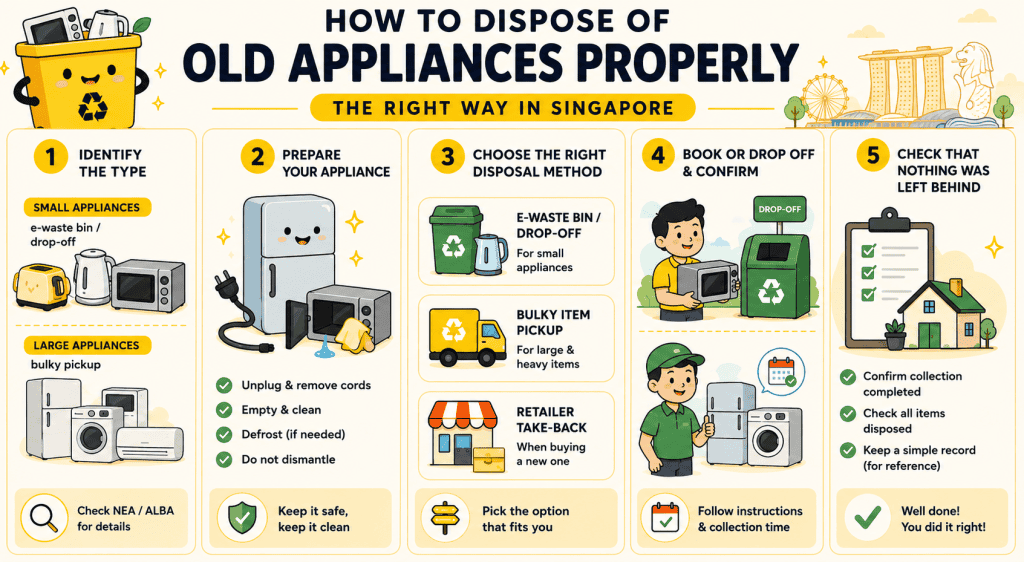
In Singapore, the main options are e-waste recycling centers and bins, bulky item pickup services, and retailer take-back programs. Follow these steps to make sure your old appliance is disposed of correctly and safely.
Step 1: Identify What Type of Appliance You Have
Before anything else, figure out whether your item is a small appliance or a large bulky good. Small appliances such as toasters, kettles, rice cookers, microwaves, and hair dryers can usually be brought to an e-waste drop-off bin or recycling center.
Large appliances such as refrigerators, washing machines, dryers, and air conditioner units are considered bulky white goods and require a separate pickup or removal service. If you are unsure which category your item falls under, check the NEA website or the ALBA e-waste recycling program for the full list of accepted items at each collection point before making any arrangements.
Step 2: Prepare the Appliance for Disposal
Once you know the disposal route, get the item ready before drop-off or pickup day. Start by unplugging the appliance completely and removing any cords that can be detached. Empty the inside by clearing out any food, water, detergent, or stored contents, then wipe the interior and exterior clean and dry.
For refrigerators and freezers, defrost the unit at least 24 hours before collection and drain any excess water before moving it. Avoid opening or dismantling the casing yourself, especially for microwaves or air conditioners, as these contain components that require professional handling.
Step 3: Choose the Right Disposal Method
With the appliance ready, select the channel that matches your item type and situation. For small appliances that are easy to carry, e-waste recycling bins and drop-off centers are the most straightforward option — simply locate your nearest ALBA e-waste bin or approved collection point and bring the item during operating hours.
For large or heavy appliances, bulky item pickup recycling is the more practical route, where HDB residents can contact their Town Council or use the bulky refuse removal portal to book a collection slot.
If you are buying a replacement appliance at the same time, retailer take-back programs are worth checking, as many retailers will collect the old unit during delivery — just confirm this arrangement before your scheduled date.
Step 4: Book or Drop Off and Confirm Collection
Once you have chosen your disposal route, complete the final handover based on the method selected. If you are using a drop-off point, bring the appliance to the collection center and place it in the correct bin or hand it to staff at a manned counter if one is available.
If you have booked a bulky item pickup, place the item at the designated collection area on the agreed date and time, and avoid leaving it in corridors, void decks, or common areas before the scheduled collection day.
For retailer take-back, have the item ready, unplugged, and accessible on delivery day, and reconfirm the arrangement with the retailer beforehand if needed.
Step 5: Check That Nothing Was Left Behind
After disposal, do a quick check to make sure everything was handled properly. If you used a pickup service, confirm that the item was collected on the scheduled day — if it was not taken, contact your Town Council or the service provider as soon as possible to reschedule.
For those disposing of multiple appliances, cross-check each one against your list to make sure nothing was missed. Businesses or residents clearing an entire flat should keep a simple record of what was disposed of, through which channel, and on which date, as this helps with documentation and avoids confusion if any follow-up is needed.
Also Read: 7 Tips for Selling Scrap Metal in Singapore (2026)
The Impact of Proper Appliance E-Waste Disposal
Proper appliance e-waste disposal supports safer neighbourhoods, cleaner shared spaces, and more responsible handling of materials that should not go into general waste. It also reduces confusion for homeowners and businesses that are clearing out old equipment.
If you need a simple next step, choose the channel that matches the item size, then either book a pickup or locate the nearest drop-off point.
For those looking for a pickup option, CSHardware offers collection services for old appliances and scrap metal in Singapore, check here! to find out the eligibility requirements and arrange a pickup that works for your situation.
Recommended Disposal Methods by Appliance Type
| Appliance Type | Size Category | Recommended Disposal Method | Estimated Cost |
|---|---|---|---|
| Toaster | Small | Drop-off at e-waste recycling center or approved bin | Free |
| Microwave | Small to medium | Drop-off at approved collection point | Free |
| Electric kettle | Small | Drop-off at e-waste bin | Free |
| Refrigerator | Large | Bulky item pickup recycling service | Free or paid |
| Washing machine | Large | Town Council or bulky item pickup service | Free or paid |
| Rice cooker | Small | Drop-off at recycling center appliances point | Free |
| Air conditioner unit | Large | Retailer take-back or bulky item pickup | Paid or bundled with replacement |
If you are sorting several items at once, a simple rule helps:
- Small appliances usually go to drop-off points
- Large white goods usually require pickup services
For homeowners moving house or businesses replacing equipment, this keeps disposal organised and helps you arrange the correct service more efficiently.
Ready to Clear Out Your Old Appliances? Here Is What to Do Next
Disposing of old appliances properly does not have to be complicated. With the right information on hand, most items can be cleared quickly and responsibly — whether that means dropping off a small kettle at the nearest e-waste bin or arranging a pickup for a bulky refrigerator.
The key is matching the item to the right channel from the start, which saves time, avoids unnecessary trips, and keeps shared spaces clean for everyone.
As one of Singapore’s trusted e-waste and metal recycling companies, Choon Sheng Hardware handles responsible disposal of old appliances and scrap metal for both households and businesses.
Whether you need a collection pickup or simply want to know more about the recycling process, our team is ready to help you clear out unwanted items the right way. Contact us, here!
Frequently Asked Questions
Why should appliances not be thrown into general waste bins?
Many appliances contain electrical parts and materials that require controlled disposal. Throwing them into general waste may create environmental and safety risks, especially for items with wiring, batteries, or cooling components.
Is there a limit to how many appliances I can recycle at one time?
Some drop-off points may have size or quantity limits, especially for bulky appliances. If you are disposing of multiple large items at once, it is better to arrange a bulky item pickup service or contact your Town Council for guidance.
Do I need to remove personal information before recycling appliances?
Yes, especially for smart appliances or devices with storage functions. If the appliance contains personal settings, Wi-Fi connections, or stored data, reset the device to factory settings before disposal whenever possible.