61 Kaki Bukit Ave 1, #01-09, Singapore 417943
 +65 6841 0661
Karang Guni in Singapore: What You Need to Know
Karang guni is Singapore’s traditional door-to-door scrap collector. Learn what they accept, how they differ from recyclers, and how CS Hardware helps.
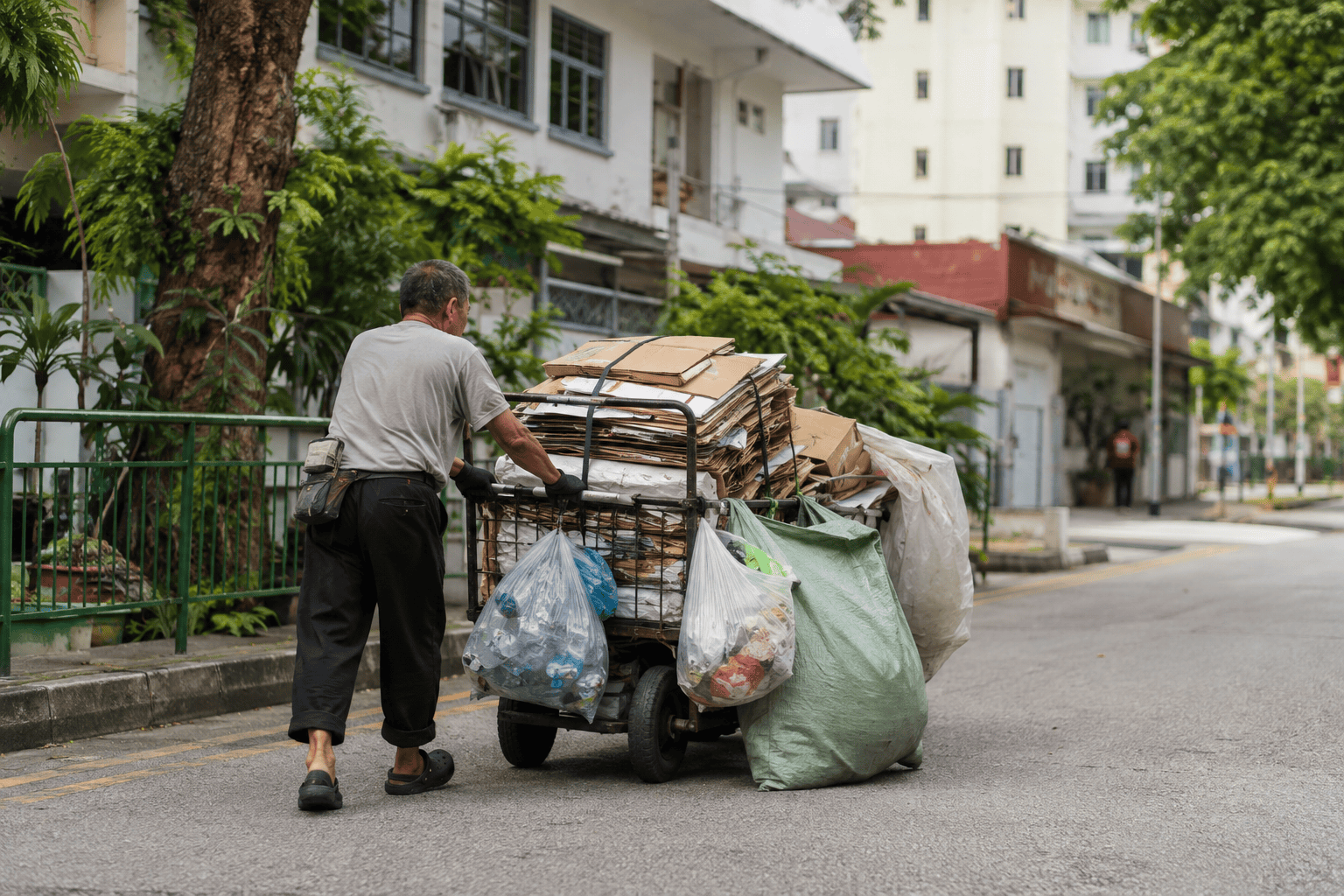
If you grew up in an HDB estate anywhere in Singapore, you probably know the sound before you know the word, a horn blast, a hand bell, or a shout of “karang guni” drifting up the stairwell, signalling someone was on their way to collect old newspapers and whatever else had piled up in the storeroom. It’s one of the country’s oldest grassroots recycling systems, quietly running long before Singapore had island-wide recycling bins or formal e-waste collection.
That trade still exists today, but it looks different than it did even ten years ago. Fewer young collectors are entering the industry, and a more formal, regulated recycling sector has grown up to handle what karang guni alone can no longer manage, from businesses to e-waste to larger volumes of scrap. Here’s what that shift actually looks like, and where CS Hardware fits in.
What Is Karang Guni?
Karang guni (also spelled karung guni) comes from the Malay term for “gunny sack” the burlap bags collectors once carried on their backs as they went door to door buying old newspapers, clothes, bottles, and broken radios. For decades, these independent collectors were a fixture of daily life in Singapore’s public housing estates, announcing themselves with a distinctive horn call and paying a small cash sum, sometimes just a few dollars, for whatever residents no longer wanted.
The materials they collected were sold on to scrap warehouses, sorted, and either resold or recycled. It was a genuinely effective grassroots recycling system, one that worked well before Singapore had island-wide recycling bins or formal e-waste collection.
That said, the trade has been shrinking. Fewer young collectors are entering the industry, and many older appliances now have so little resale value that karang guni operators are more selective about what they’ll pick up. In their place, a more formal scrap metal and recycling industry has grown up to handle the volume, and complexity, of what modern households and businesses need to dispose of.
Also Read: Hoarding Problem in Singapore: Solutions & Cleaning Services
Karang Guni vs Licensed Scrap Recyclers
The question of “what does karang guni accept” is really best answered by comparison, because the gap only becomes clear once you put it next to a licensed recycler. An independent, street-level karang guni typically focuses on items with easy resale value paper, cardboard, and small electronics, while a licensed scrap recycler is set up to handle a far broader and more technical range of materials, including industrial scrap and regulated e-waste.
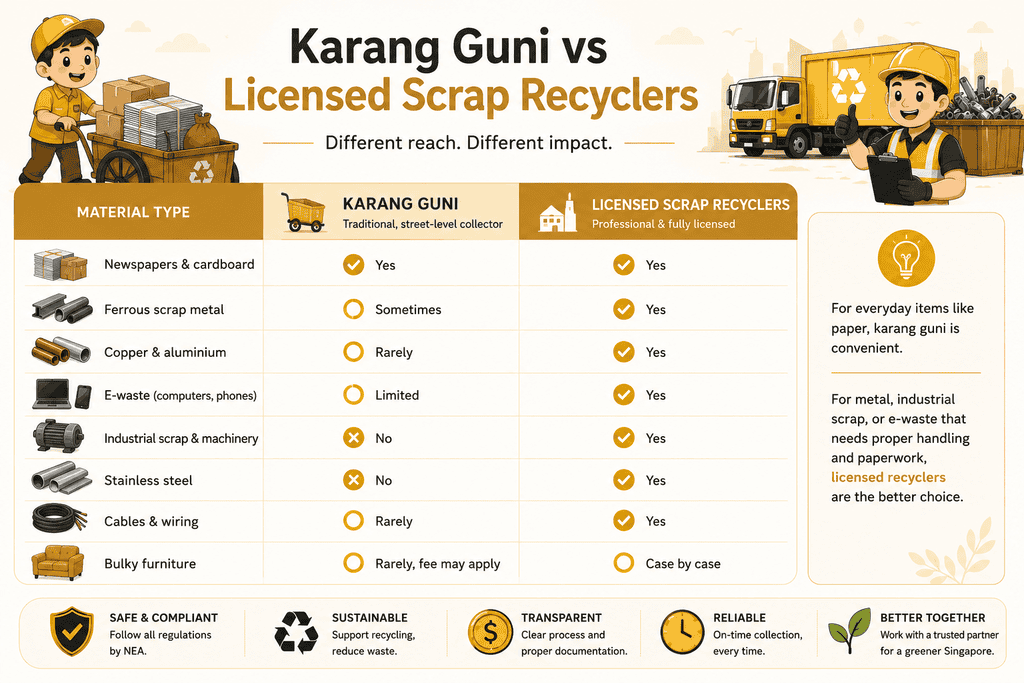
| Material Type | Traditional Karang Guni | Licensed Scrap Recycler |
|---|---|---|
| Newspapers & cardboard | Yes | Yes |
| Ferrous scrap metal | Sometimes | Yes |
| Copper & aluminium | Rarely | Yes |
| E-waste (computers, phones) | Limited | Yes |
| Industrial scrap & machinery | No | Yes |
| Stainless steel | No | Yes |
| Cables & wiring | Rarely | Yes |
| Bulky furniture | Rarely, fee may apply | Case by case |
So if you’re clearing out a stack of newspapers, a karang guni collector is often the easiest option. But for scrap metal, industrial machinery, or e-waste that needs proper handling and paperwork, CS Hardware covers everything a traditional collector typically can’t see our accepted materials page for the complete list.
Why the Traditional Karang Guni Model Has Limitations
While the informal karang guni collector has served Singapore communities well for decades, there are genuine limitations to relying solely on this model — especially for businesses and large-scale disposals.
Regulatory Compliance
Singapore has strict regulations governing the disposal of certain materials, particularly e-waste and industrial scrap. Under the Extended Producer Responsibility (EPR) framework introduced by the NEA, producers and retailers of regulated electrical and electronic equipment are legally required to ensure proper end-of-life treatment. Simply passing items to an informal collector does not fulfil these obligations. Working with a licensed scrap metal dealer ensures full compliance.
Consistency and Reliability
For businesses that generate regular volumes of scrap — whether from manufacturing, construction, or office operations, relying on ad-hoc karang guni visits is impractical. Scheduled collection services offer predictability and proper documentation, which is especially important for corporate sustainability reporting.
Material Value
Professional recyclers have the equipment and expertise to properly sort, weigh, and process materials. This means you receive a fair and transparent assessment of what your scrap is worth, rather than an informal estimate with no documentation.
Also Read: 7 Challenges of E-Waste Recycling in Singapore and How to Solve Them
How Choon Sheng Hardware Trading Modernises the Karang Guni Experience
We believe the core values of the karang guni tradition, community service, resourcefulness, and giving new life to old materials are just as relevant today as they were decades ago. What we bring to the table is a professional infrastructure that makes the process safer, fairer, and more sustainable.
Our Collection Services
We offer flexible collection arrangements to suit different needs. Whether you are a homeowner clearing out a garage, a small business upgrading your equipment, or a large enterprise managing ongoing scrap output, we have solutions designed around your circumstances. Learn more on our collection options page.
What We Handle
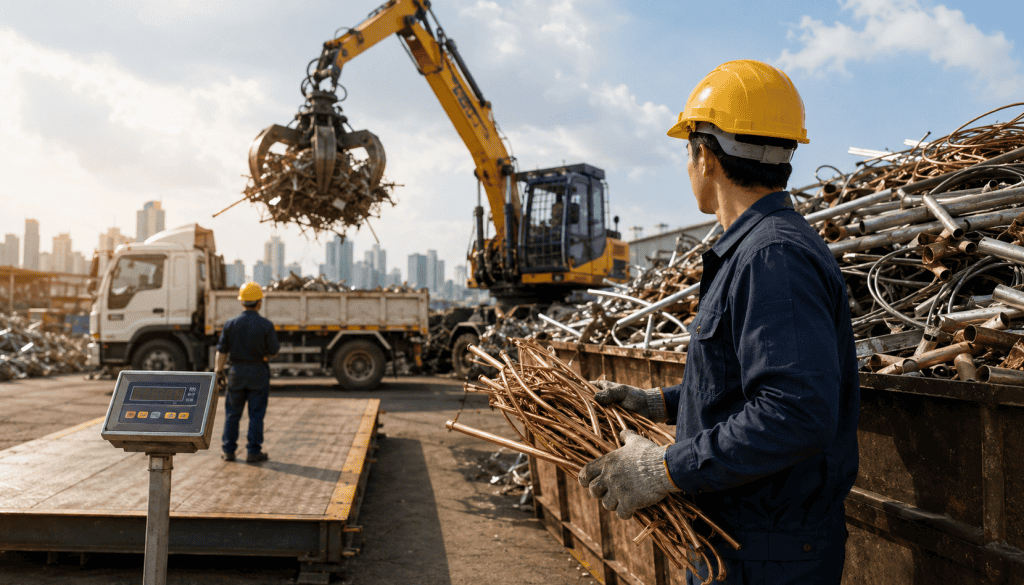
Our team is equipped to collect and process a broad range of scrap metals and electronic waste, including:
- Ferrous metals such as mild steel, cast iron, and structural steel
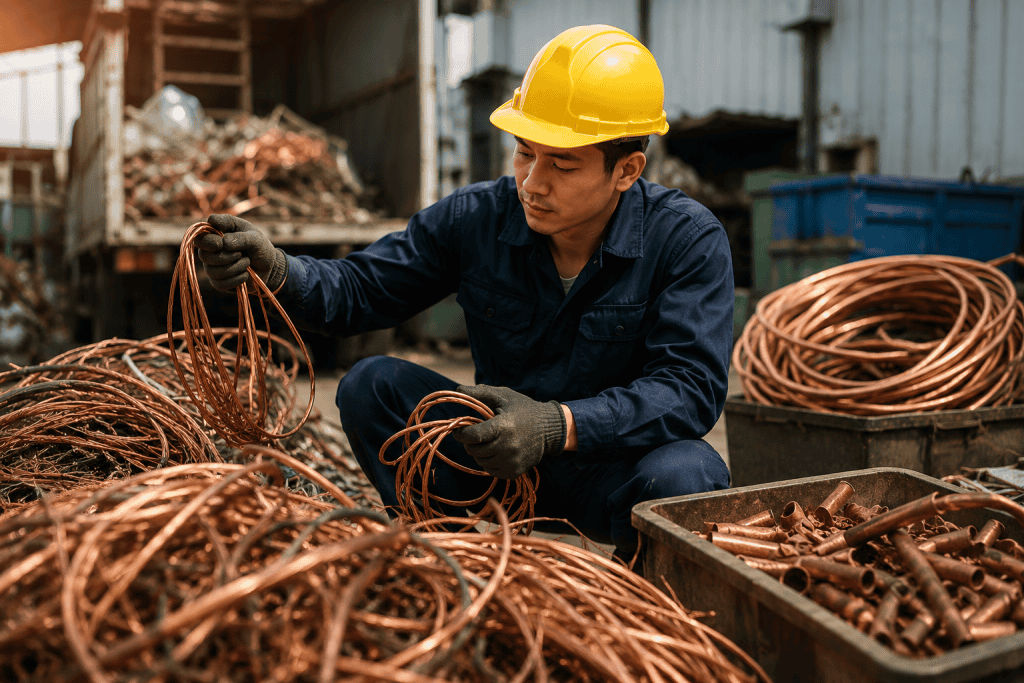
- Non-ferrous metals including copper, aluminium, brass, and stainless steel
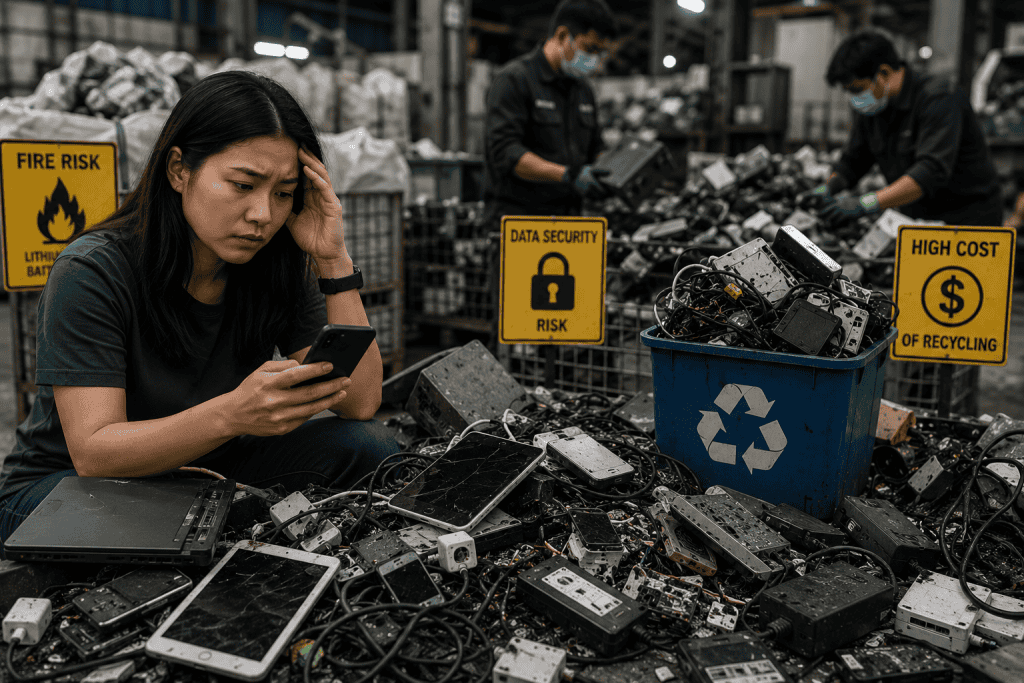
- Electronic waste such as computers, servers, laptops, and mobile devices
- Industrial machinery and components
- Cables and wiring
- Used batteries and transformers (subject to regulatory requirements)
For a comprehensive overview of everything we handle, browse our services page.
Karang Guni and Singapore’s Recycling Goals
Semakau Landfill, Singapore’s only landfill, is on track to run out of space by 2035 at current disposal rates, which is part of why the National Environment Agency’s Zero Waste Masterplan pushes hard on reducing what gets sent there. Every kilogram of scrap metal or e-waste that’s properly recycled, rather than incinerated, plays a small part in stretching that timeline.
In a way, this brings things full circle. The instinct behind karang guni, that old materials are a resource, not rubbish, is exactly the mindset behind Singapore’s national recycling targets. Choosing a responsible way to dispose of scrap, whether that’s an informal collector for a stack of newspapers or a licensed recycler for a larger load, is a small but real contribution to that goal.
Choose the Right Way to Recycle With CS Hardware
Whether you’ve got a stack of old newspapers or a warehouse full of scrap metal, there’s a way to see it recycled properly instead of thrown away. If your load falls outside what a street-level karang guni can take — larger volumes, e-waste, industrial materials, or anything that needs documentation, that’s exactly where Choon Sheng Hardware Trading comes in.
We’ve built our reputation on fast, reliable, and fully documented scrap metal and e-waste collection for households and businesses across Singapore. Get a free, no-obligation valuation and find out what your materials are really worth.
Need Scrap Metal Collection or Recycling? Choon Sheng Hardware Trading offers fast, reliable scrap metal and e-waste collection across Singapore, from a single household load to full industrial clearance. Contact us here!
Frequently Asked Questions
Is karang guni still active in Singapore?
Yes, though the number of independent collectors has declined over the years, and many now focus only on items with clear resale value.
Do karang guni collectors take furniture?
Rarely, and usually only if it’s in good condition. Bulky furniture typically has little resale value, so most collectors either decline it or charge a fee.
What’s the difference between karang guni and a scrap metal recycler?
Karang guni collectors are informal, independent operators focused on resale value. Licensed recyclers like CS Hardware handle a wider range of materials, follow regulatory requirements, and provide proper documentation.
Can businesses rely on karang guni for regular scrap disposal?
It’s possible for very small volumes, but most businesses find scheduled collection through a licensed recycler more practical and better documented for compliance purposes.
Does karang guni collection include e-waste?
Some collectors take basic electronics, but regulated e-waste disposal under Singapore’s Extended Producer Responsibility framework generally requires a licensed recycler.