61 Kaki Bukit Ave 1, #01-09, Singapore 417943
 +65 6841 0661
Copper Wire Recycling in Singapore: Value & Process
Understand how copper wire recycling works in Singapore, what determines its value, and how to prepare your scrap for a fair, transparent payout.
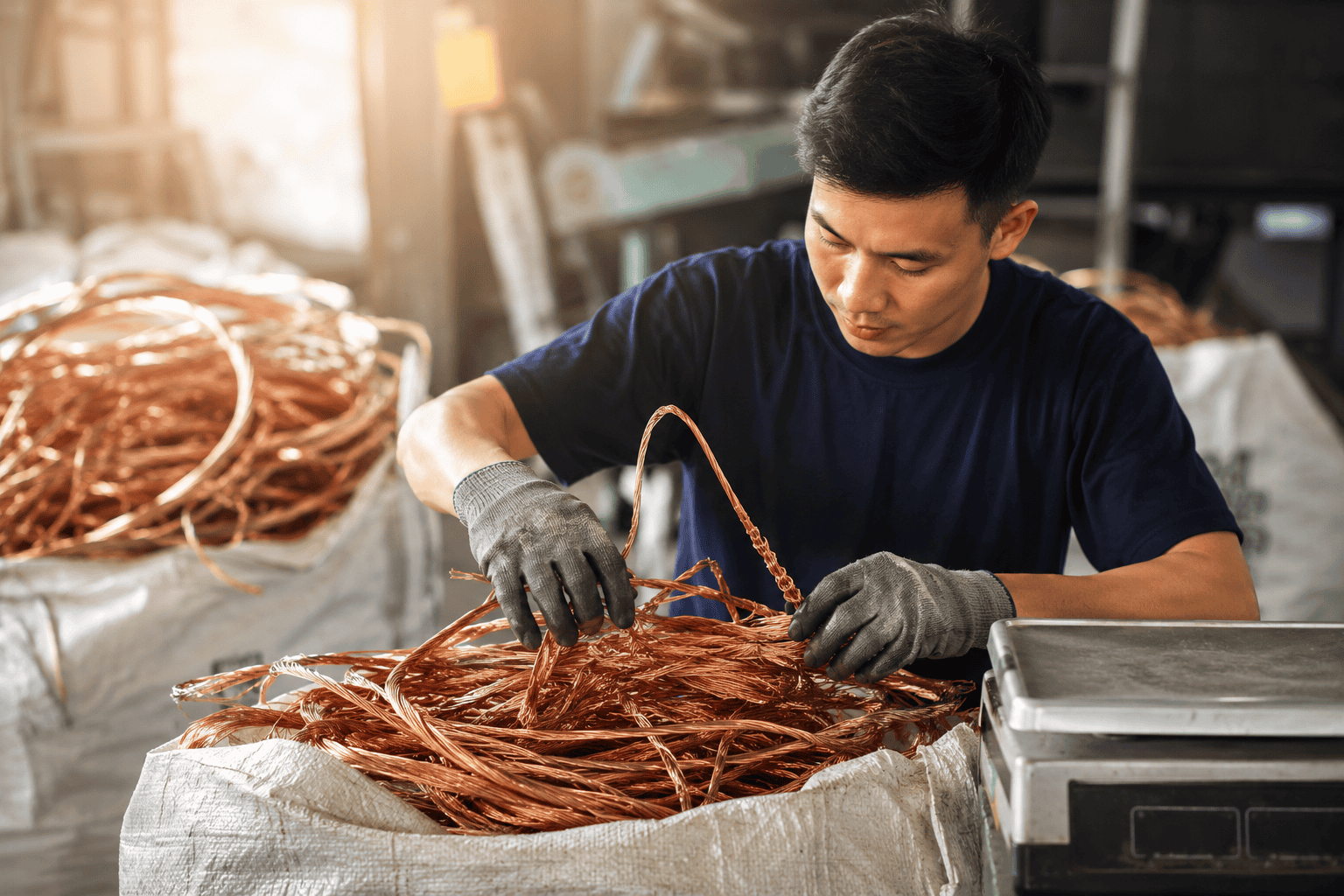
Copper wire is one of the most commonly recycled scrap metals in Singapore, generated from electrical rewiring jobs, demolition sites, and old appliances.
How much recyclable value it holds depends on grade, purity, and how well it’s prepared before sale. This guide covers what determines copper wire’s value, current market context, the recycling process, and how to prepare your scrap for a fair payout.
What Determines Copper Wire Scrap Value
Several factors affect how much a batch of copper wire is worth, independent of the general market rate at any given time.
Purity and Grade
Clean, uncoated copper is worth more than wire still wrapped in insulation or mixed with other metals. The less processing a buyer has to do before the material is sale-ready, the higher the value.
Thickness of the Wire
Thicker cable generally yields more usable copper by weight than thin control wiring, which affects how it’s graded relative to bare, heavier-gauge wire.
Condition and Contamination
Oxidation, solder, tin coating, or attached iron fittings all lower a batch’s grade, since separating out the contamination adds cost on the buyer’s end.
Load Volume
Larger, well-sorted loads generally receive better terms than small, mixed batches, since bulk reduces handling costs relative to the amount recovered.
Also Read: The Value of Recycling Old Machines in Singapore: A Business Guide
Scrap Copper Price in Singapore
Copper scrap pricing in Singapore is not fixed, and shifts regularly based on global commodity trends, grade, and buyer. As a general estimate, copper scrap in Singapore typically trades in the range of S$6 to S$10 per kilogram, with insulated wire generally priced lower than bare or clean copper due to the additional processing required to remove the coating.
For live market context, you can check the London Metal Exchange and review Singapore’s environmental handling rules through the National Environment Agency.
| Copper Type | Approximate Price Range (SGD/kg) | Notes |
|---|---|---|
| Bare/Clean Copper | Toward the higher end of S$6–S$10 | Minimal processing required; higher purity |
| Insulated Copper Wire | Toward the lower end of S$6–S$10 | Lower due to insulation removal costs |
Because rates move with global commodity prices and vary by buyer, the most accurate way to know what your specific load is worth is to request a live quote from a licensed buyer rather than relying on a published range.
The Copper Wire Recycling Process
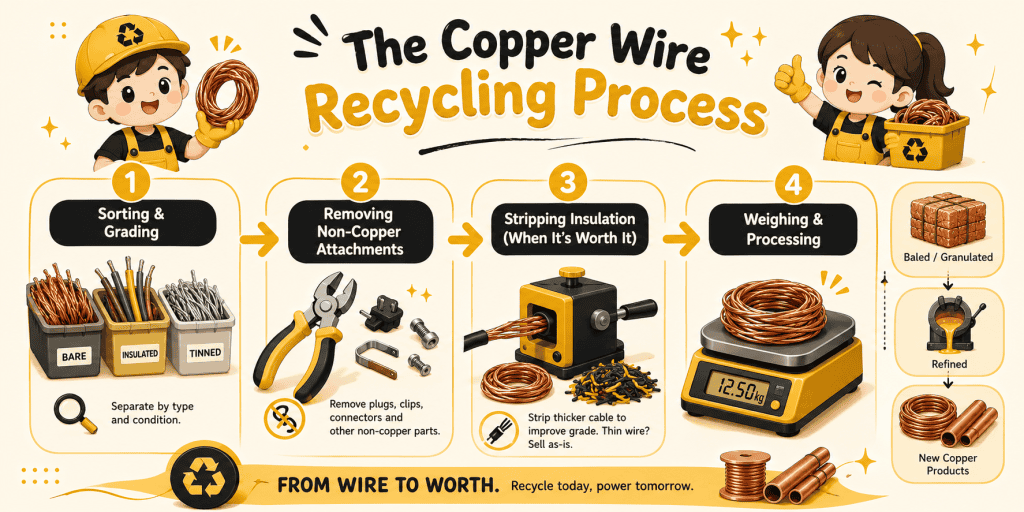
1. Sorting and Grading
Wire is first separated by type (bare, insulated, tinned) and condition. Buyers grade each pile before weighing, so pre-sorting at home speeds up the process and avoids the whole batch being priced at the lowest grade present.
2. Removing Non-Copper Attachments
Plugs, steel clips, connectors, and other non-copper parts are removed, either by the seller beforehand or by the buyer during processing. Removing them yourself generally results in a cleaner grade.
3. Stripping Insulation (When It’s Worth It)
Insulated wire can be stripped to raise its grade, but this only pays off on thicker cable where the labour time is justified. On thin wiring, the value gain is usually too small to offset the effort, so it’s often better to sell it insulated and let the buyer process it.
4. Weighing and Processing
Sorted material is weighed on certified scales, and payment is calculated based on grade and current rates. From there, copper is baled or granulated to separate metal from insulation, then sent for refining and recast into new copper products.
Get the Most Value from Copper Wire Recycling in Singapore
Beyond understanding grading and pricing, a few practical habits can meaningfully improve what you walk away with when selling copper wire scrap.
Sort by Grade Before You Arrive
Buyers price based on the lowest grade present in a mixed load. Separating bare, insulated, and contaminated copper into their own piles before you even leave home means you’re paid accurately for each type, not averaged down.
Store Copper Away from Moisture and Contaminants
Copper left exposed to rain or damp storage can develop oxidation, which lowers its grade over time. Keeping wire dry and away from other materials like steel or aluminium preserves its value until you’re ready to sell.
Compare Quotes from More Than One Buyer
Rates can vary between buyers even on the same day, since each dealer sets pricing based on their own processing costs and current demand. Getting quotes from two or three licensed buyers before committing helps confirm you’re getting a fair rate.
Sell in Bulk Where Possible
Larger, well-sorted loads are generally more efficient for buyers to process, which can translate into better terms compared to frequent small drop-offs. If you’re not in a rush, consolidating smaller amounts into one larger load is often worth the wait.
Ask for a Transparent Fee Breakdown
Some facilities apply handling or processing deductions that reduce your final payout. Asking upfront what, if anything, will be deducted from the quoted rate avoids surprises at the point of payment.
Choose a Licensed, NEA-Compliant Buyer
Beyond getting a fair price, selling to a properly licensed recycler ensures your scrap is handled and processed in compliance with Singapore’s waste management regulations, rather than through informal or unregulated channels.
Why Recycle Your Copper Wire
Beyond the payout, recycling copper wire reduces the environmental footprint of new copper production and keeps reusable material out of landfills. For businesses handling electrical works, demolition, or equipment teardown, proper copper recycling also supports compliance with Singapore’s waste management regulations under the National Environment Agency.
- Lower Environmental Impact Than Mining New Copper: Producing copper from raw ore requires significant energy for mining, smelting, and refining. Recycled copper skips most of that process, since the metal is already refined and only needs to be melted down and recast, which uses considerably less energy than starting from virgin ore.
- Copper Can Be Recycled Without Losing Quality: Unlike some materials that degrade with each recycling cycle, copper retains its conductivity and physical properties even after multiple rounds of reprocessing. This means recycled copper wire can go straight back into cable, plumbing, or electronics manufacturing without a drop in performance.
- Reduces Landfill Waste from Construction and Demolition: Electrical wiring is a common byproduct of renovation, demolition, and equipment teardown projects. Without recycling, this copper often ends up discarded alongside other construction debris, even though it retains full recyclable value.
- Supports Regulatory Compliance for Businesses: Contractors, electricians, and demolition companies that generate copper waste as part of their work are expected to manage it responsibly under NEA guidelines. Working with a licensed recycler helps ensure waste is processed through proper channels rather than informal disposal.
- Contributes to a Circular Materials Economy: Every kilogram of copper recovered and reprocessed reduces reliance on newly mined copper, supporting a more sustainable, closed-loop materials system, particularly relevant as demand for copper continues to grow through electrification and construction activity.
Also Read: 5 Steps Metal Recycling Process: The Complete Facility Workflow
Choosing a Reliable Copper Wire Buyer in Singapore
Look for a buyer that weighs on certified scales, explains its grading system clearly, and discloses any processing or handling fees upfront. Licensed, NEA-compliant recyclers are generally more transparent about how rates are calculated and less likely to apply undisclosed deductions at the point of sale.
Check for Proper Licensing
A legitimate buyer should be licensed to handle scrap metal under NEA regulations. This isn’t just a compliance checkbox for you as a seller, it also signals that the buyer follows proper environmental handling standards rather than operating informally.
Ask How Grading Is Determined
Reliable buyers can clearly explain how they assess and grade copper, whether by purity, thickness, or contamination level, and are willing to walk you through why your material was placed in a particular grade rather than giving a vague, unexplained rate.
Confirm the Weighing Process
Material should be weighed on certified, calibrated scales, ideally in a way you can observe. Buyers who are transparent about their weighing process give sellers confidence that the payout reflects the actual weight delivered.
Clarify Any Deductions Before Selling
Some facilities apply handling, processing, or transport fees that reduce the final payout. A trustworthy buyer discloses these upfront rather than adjusting the quote after your material has already been weighed and accepted.
Compare Reviews and Track Record
Checking reviews or asking for references, particularly from other businesses or contractors who sell regularly, can help confirm a buyer’s reputation for fair and consistent pricing over time.
Prioritise Buyers Who Offer Live, Direct Quotes
Since copper prices shift with the market, a reliable buyer will offer a current quote based on your actual load rather than relying solely on a generic published rate, which protects you from being underpaid relative to that day’s market conditions.
Recycle Your Copper Wire with CS Hardware
Getting fair value for copper wire starts with understanding how grading works and preparing your material accordingly, well before you step into a scrap yard. Whether you’re clearing out a renovation site, an old electrical job, or a bulk industrial load, sorting by grade and removing contaminants puts you in a stronger position regardless of which buyer you choose.
Choon Sheng Hardware Trading offers transparent weighing, clear grade classification, and NEA-compliant copper wire recycling across Singapore. Contact us, for a live quote based on today’s rates, or to arrange a pickup or drop-off.
Frequently Asked Questions
What is the difference between bare copper and insulated copper wire?
Bare copper has no coating and is ready for processing, while insulated copper still has plastic or rubber covering that must be stripped or granulated before the copper can be recovered, which is why insulated wire is typically valued lower.
Should I strip insulation off copper wire myself before selling it?
It depends on the thickness of the wire. Thicker cable often benefits from stripping, but thin wiring usually isn’t worth the labour time. A buyer can advise on whether it makes sense for your specific load.
Why do copper scrap prices change so often?
Copper scrap rates are generally benchmarked against global commodity prices, which move daily based on supply, demand, and industrial activity. This is why static price lists go out of date quickly.
Is copper wire recycling regulated in Singapore?
Yes. Scrap metal recycling falls under National Environment Agency guidelines, and licensed facilities are expected to follow proper waste handling and processing standards.