61 Kaki Bukit Ave 1, #01-09, Singapore 417943
 +65 6841 0661
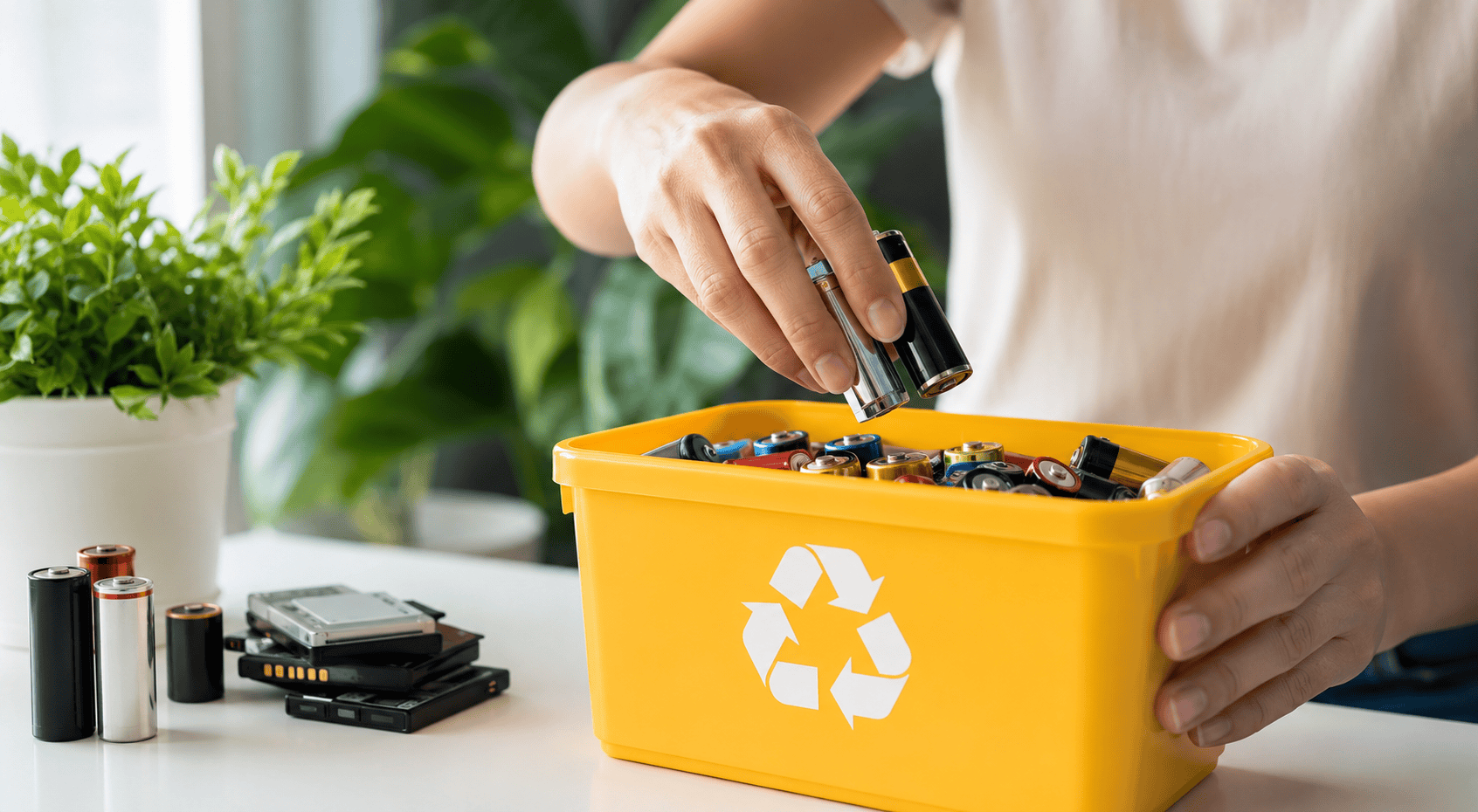
Battery Disposal Singapore: Safe Recycling Guide
Learn the safest ways to handle battery disposal in Singapore, from alkaline and lithium-ion to car and UPS batteries. Find collection and recycling points near you.
Batteries power countless devices we rely on every day, from TV remotes and laptops to electric vehicles and backup power systems. However, when these batteries reach the end of their lifespan, disposing of them incorrectly can pose significant environmental and safety risks.
Whether you’re a homeowner, business owner, or facility manager, understanding the proper methods of battery disposal in Singapore helps protect the environment while ensuring compliance with local waste management guidelines.
This guide explains how to dispose of different battery types safely, where to find battery recycling facilities, and the best practices for responsible battery disposal in Singapore.
Why Safe Battery Disposal Matters
Many households and businesses in Singapore accumulate used batteries from daily devices and equipment. Improper handling can lead to leaks or short circuits that affect the environment and public safety. The National Environment Agency (NEA) guidelines emphasize separating batteries by chemistry to support proper recycling and reduce landfill waste.
Following correct disposal methods helps recover materials like metals and prevents unnecessary hazards. This approach aligns with Singapore’s sustainability targets and empowers residents to manage waste responsibly through certified channels.
How to Dispose of Household Batteries
Household batteries are commonly used in remote controls, flashlights, clocks, toys, wireless keyboards, and portable electronic devices. Before recycling them, it is important to sort batteries by type, as each requires different handling.
Alkaline Battery Disposal
Alkaline batteries are among the most commonly used household batteries. Before disposal, place a piece of non-conductive tape over both battery terminals to reduce the risk of accidental contact during transportation.
Instead of throwing them into general waste, deposit alkaline batteries at designated battery recycling bins whenever possible. Recycling helps recover useful materials while reducing landfill waste.
Lithium and Lithium-Ion Battery Disposal
Lithium and lithium-ion batteries are widely used in smartphones, laptops, tablets, cameras, cordless tools, and power banks.
Because these batteries are more reactive than alkaline batteries, they require additional precautions:
- Cover the battery terminals with electrical tape.
- Store them in a non-metallic container.
- Keep batteries away from heat or direct sunlight.
- Never puncture, crush, or dismantle damaged batteries.
Take lithium batteries to approved e-waste recycling collection points for safe recycling.
Disposing of Vehicle and Industrial Batteries
Vehicle and industrial batteries are larger and contain higher volumes of chemicals. They require transport to specialized handlers rather than standard household routes to ensure safe processing.
1. Car Battery Disposal Singapore
Car batteries are typically lead-acid units removed during vehicle servicing. Take them to battery retailers or workshops that accept trade-ins. This method complies with local regulations and allows professional recycling of lead and acid components.
2. Lead Acid Battery Disposal
Lead acid batteries from various equipment must go to certified scrap dealers or e-waste facilities. Contact authorized services for drop-off or collection to handle the hazardous materials correctly under NEA oversight.
3. UPS Battery Disposal
UPS batteries power backup systems in homes and offices. Arrange pickup or delivery through specialized collection services that manage both lead-acid and lithium types. Confirm acceptance criteria with the provider before transport.
Also Read: How to Recycle Old Appliances in Singapore: The Complete E-Waste Guide
Where to Recycle Used Batteries in Singapore
Locating the correct point depends on battery size and chemistry. Use official resources to identify nearby options and confirm acceptance before visiting.
E-Waste Recycling Bins
ALBA e-waste recycling bins accept many household battery types across Singapore. Download the ALBA Step Up app or check their website to find the closest bin and verify current operating hours.
Specialized Collection Services
Certified e-waste recyclers and scrap dealers handle vehicle and industrial batteries. The NEA maintains lists of approved handlers that can manage larger volumes or provide scheduled collections for residential and commercial users.
For businesses and households looking to dispose of car batteries, lead-acid units, or industrial batteries, CS Hardware offers reliable scrap metal and battery collection services across Singapore. As a trusted recycling partner, we handle scheduled pickups and ensure your used batteries are processed through the right channels. Contact us to find out more or arrange a collection.
Best Practices for Safe Battery Disposal
Following a few simple precautions can significantly reduce risks during storage and transportation.
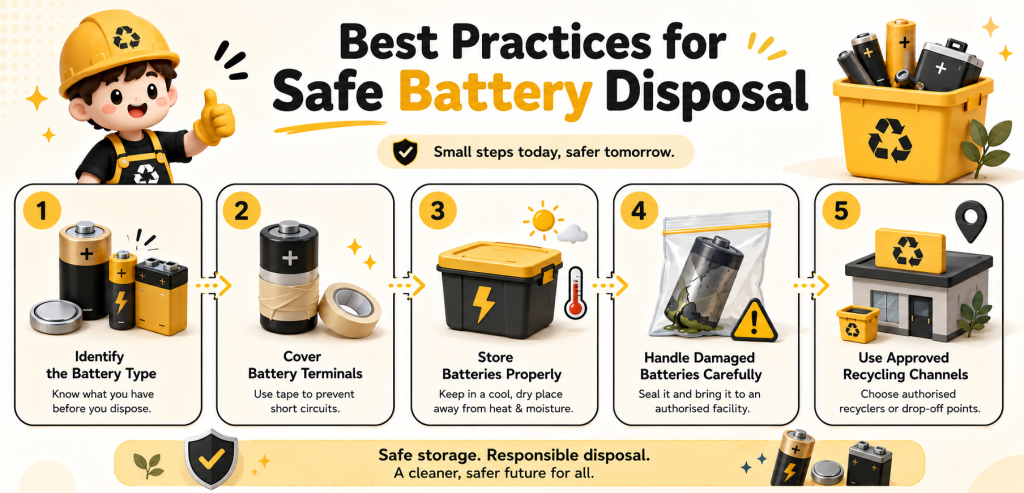
1. Identify the Battery Type
Different battery chemistries require different recycling methods. Separate alkaline, lithium-ion, lead-acid, and rechargeable batteries before disposal.
2. Cover Battery Terminals
Use electrical or non-conductive tape to cover exposed terminals. This prevents accidental short circuits that may generate heat or sparks.
3. Store Batteries Properly
Keep used batteries in a cool, dry place away from moisture, direct sunlight, and flammable materials until they can be recycled.
4. Handle Damaged Batteries Carefully
If a battery appears swollen, leaking, cracked, or damaged, place it in a non-flammable container or sealed bag and deliver it promptly to an authorised recycling facility. Avoid using or charging damaged batteries.
5. Use Approved Recycling Channels
Always dispose of batteries through authorised recycling programmes, battery retailers, licensed scrap dealers, or certified e-waste recyclers rather than placing them in regular household rubbish.
Also Read: E-Waste Recycling Singapore: Complete Guide for Homes and Business
Recommended Battery Disposal Methods
| Battery Type | Recommended Disposal Method | Suitable Collection Point |
|---|---|---|
| Alkaline Batteries | Tape terminals before recycling | E-waste recycling bins |
| Lithium-Ion Batteries | Insulate terminals and avoid physical damage | Approved e-waste recyclers |
| Lead-Acid Batteries | Return to authorised battery dealers or recyclers | Licensed scrap metal recyclers |
| Car Batteries | Exchange during battery replacement | Battery workshops and retailers |
| UPS Batteries | Arrange professional collection | Certified battery recycling companies |
Dispose of Your Batteries the Right Way at CS Hardware
Proper battery disposal is not just about following regulation, it is a practical step towards protecting Singapore’s environment and recovering valuable materials that would otherwise go to waste. Whether you are clearing out old household batteries, replacing a car battery, or managing used UPS units from your office, knowing the right channel for each type makes the process straightforward and safe.
For households and businesses looking for a reliable recycling partner, Choon Sheng Hardware (CS Hardware) offers a comprehensive range of services covering e-waste recycling, scrap metal collection, and dismantling and disposal — all relevant to your battery and equipment clearance needs.
Our recycling programmes are available for both commercial and residential clients, with free pickup across Singapore for larger quantities. Getting started is simple, contact us for a free quote, schedule a pickup, and receive immediate payment upon collection.
Ready to dispose of your used batteries responsibly? Contact us here! to learn more or submit an enquiry today.
Frequently Asked Questions
How do I safely dispose of swollen lithium-ion batteries in Singapore?
Insulate the terminals, place the battery in a non-flammable container, and bring it to a certified e-waste recycler as soon as possible. Do not leave swollen batteries in storage or expose them to heat, as they pose a fire risk.
Can I throw normal alkaline batteries in the regular trash?
Small alkaline batteries are generally low-risk, but disposing of them through proper recycling channels is the better option. Recycling helps recover usable materials and keeps harmful substances out of the general waste stream.
Where can I drop off an old car battery or lead-acid battery?
Car and lead-acid batteries can be returned to battery retailers or workshops during servicing. Certified scrap dealers and e-waste recyclers are also equipped to handle them safely and in compliance with local regulations.
Does someone collect UPS batteries from my home or office?
Yes — specialized collection services handle UPS battery pickups for both residential and commercial premises. Confirm the battery type and quantity with the provider beforehand to ensure they can accommodate your needs.
Can businesses arrange bulk battery collection?
Many certified recyclers offer scheduled collection programmes for businesses generating larger volumes of used batteries. This is especially useful for offices managing UPS units or facilities replacing industrial equipment regularly.
How should I store used batteries before disposal?
Keep used batteries in a cool, dry place away from direct sunlight. Cover the terminals with non-conductive tape to prevent short circuits, and store them in a sturdy, non-flammable container until you are ready to drop them off or arrange a collection.