61 Kaki Bukit Ave 1, #01-09, Singapore 417943
 +65 6841 0661
Where to Sell Scrap Metal in Singapore: A Professional Guide (2026)
Learn how to sell scrap metal in Singapore. Our guide covers choosing professional dealers, the weighing process, NRIC requirements, and how to get the best value for your scrap.
Selling scrap metal in Singapore is an effective way for businesses and individuals to generate additional income while supporting sustainable recycling practices. Whether you have copper cables, aluminum offcuts, stainless steel components, brass fittings, or iron scrap from industrial operations, choosing the right scrap metal dealer can help you maximize value while ensuring legal and environmentally responsible disposal.
This guide explains how the scrap metal selling process works, what to expect when dealing with professional recyclers, and how to obtain the best value for your materials.
Why Sell Your Scrap Metal?
Generate Additional Revenue
Many businesses accumulate surplus metal through manufacturing, renovation, construction, or maintenance activities. Rather than allowing these materials to occupy valuable space, selling them to a reputable scrap dealer can convert waste into cash.
Free Up Storage Space
Unused scrap metal can quickly take over warehouses, workshops, and job sites. Recycling helps maintain a cleaner and more efficient working environment.
Support Environmental Sustainability
Metal recycling reduces the need for raw material extraction, conserves natural resources, and lowers energy consumption associated with metal production.
Improve Workplace Safety
Removing excess scrap helps reduce trip hazards and improves overall site organization.
Support ESG and Sustainability Goals
Proper recycling practices help businesses demonstrate responsible waste management and environmental stewardship.
Who Buys Scrap Metal in Singapore?
Scrap metal buyers in Singapore generally fall into two categories: licensed scrap yards and recycling companies operating under NEA permits, and unlicensed or informal collectors.
The difference matters more than most sellers realise.
| Criteria | Licensed Dealer | Unlicensed Collector |
|---|---|---|
| Calibrated weighing scales | Yes | Not guaranteed |
| NEA licensing | Yes | No |
| Payment traceability | Invoice/receipt issued | Cash, no record |
| Fixed location | Yes | No |
| NRIC verification | Required | Often skipped |
Working with a licensed dealer protects you from disputes over weight, grade, or payout. It also ensures your transaction is legally compliant — which matters if you are selling on behalf of a company or clearing a commercial site.
Do You Need an ID to Sell Scrap Metal in Singapore?
Yes. Under Singapore’s regulations designed to prevent metal theft and ensure transaction traceability, sellers are required to present a valid NRIC (for Singapore citizens and PRs) or Work Permit / Employment Pass for foreign nationals.
This applies whether you are selling as an individual or on behalf of a business. Reputable dealers will always request identification before completing a transaction. If a buyer skips this step, treat it as a red flag.
Ferrous vs. Non-Ferrous: What You Need to Know Before You Sell
Understanding the difference between ferrous and non-ferrous metals is the single most useful thing you can do before your first visit to a scrap yard.
- Ferrous metals contain iron. They are magnetic, prone to rust, and generally lower in value. Common examples include mild steel, iron beams, rebars, and gates.
- Non-ferrous metals contain no iron. They are non-magnetic, more resistant to corrosion, and command significantly higher prices due to demand in electrical, plumbing, and manufacturing industries.
| Metal | Type | Relative Value |
|---|---|---|
| Copper | Non-ferrous | Very high |
| Brass | Non-ferrous | High |
| Aluminium | Non-ferrous | Medium |
| Stainless Steel | Non-ferrous | Medium |
| Iron / Mild Steel | Ferrous | Lower |
A quick magnet test before you arrive helps you sort correctly and quote your load accurately to the dealer. Non-ferrous metals should always be kept separate — mixing them with ferrous scrap will pull down the effective rate on your entire load.
Also Read: Singapore Scrap Metal Price Guide: Current Rates & Values (2026)
How to Identify a Professional Scrap Metal Dealer
Not all scrap yards operate to the same standard. When evaluating a dealer, look for these markers of a professional operation:
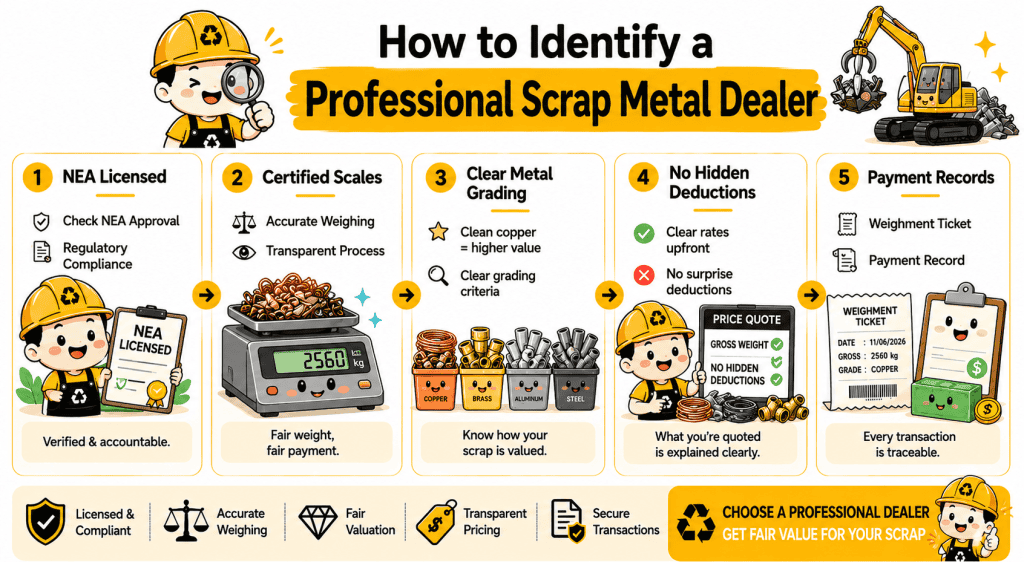
NEA Licensing
Scrap metal dealers and recyclers in Singapore must hold the appropriate permits from the National Environment Agency under the Environmental Public Health Act. This covers waste collection, hazardous materials handling, and e-waste dismantling. You can verify licensed general waste collectors through the NEA website.
Calibrated Digital Scales
A professional dealer uses certified digital weighing equipment. Ask whether the scales are calibrated and whether you can observe the weighment. Transparent dealers will have no objection.
Clear Grade Classification
Your payout depends on the grade assigned to your metal — clean copper earns more than coated or mixed copper, for example. A reputable dealer explains the grading criteria before weighing, not after.
No Hidden Deductions
Confirm upfront whether the quoted rate applies to the gross weight or net weight after deductions for contamination, insulation, or moisture. Legitimate dealers are transparent about this.
Receipt or Payment Record
A professional transaction includes a weighment ticket and payment record. If a buyer pays cash with no documentation, you have no recourse if there is a dispute.
Looking for a licensed scrap metal recycler in Singapore that meets all of the above? Choon Sheng Hardware offers transparent weighing, clear grade classification, and competitive rates — with full NEA licensing and prompt payment on every transaction.
The Step-by-Step Sell Scrap Metal in Singapore
Here is what to expect from the moment you arrive at a scrap yard in Singapore to when payment is made:
1. Sort and identify your metals
Separate your load by metal type before arrival — copper, aluminium, brass, stainless steel, and ferrous metals should all be in separate bags or containers. Remove non-metal attachments where practical.
2. Present your identification
Bring your NRIC, Work Permit, or Employment Pass. This is a legal requirement and will be requested before any transaction is processed.
3. Request today’s rate
Ask for the current buy price per kg for each metal type you are selling. Rates move with the commodity market and may differ from published guides. Confirm whether the rate quoted is for clean sorted metal or mixed load.
4. Weighment and grade check
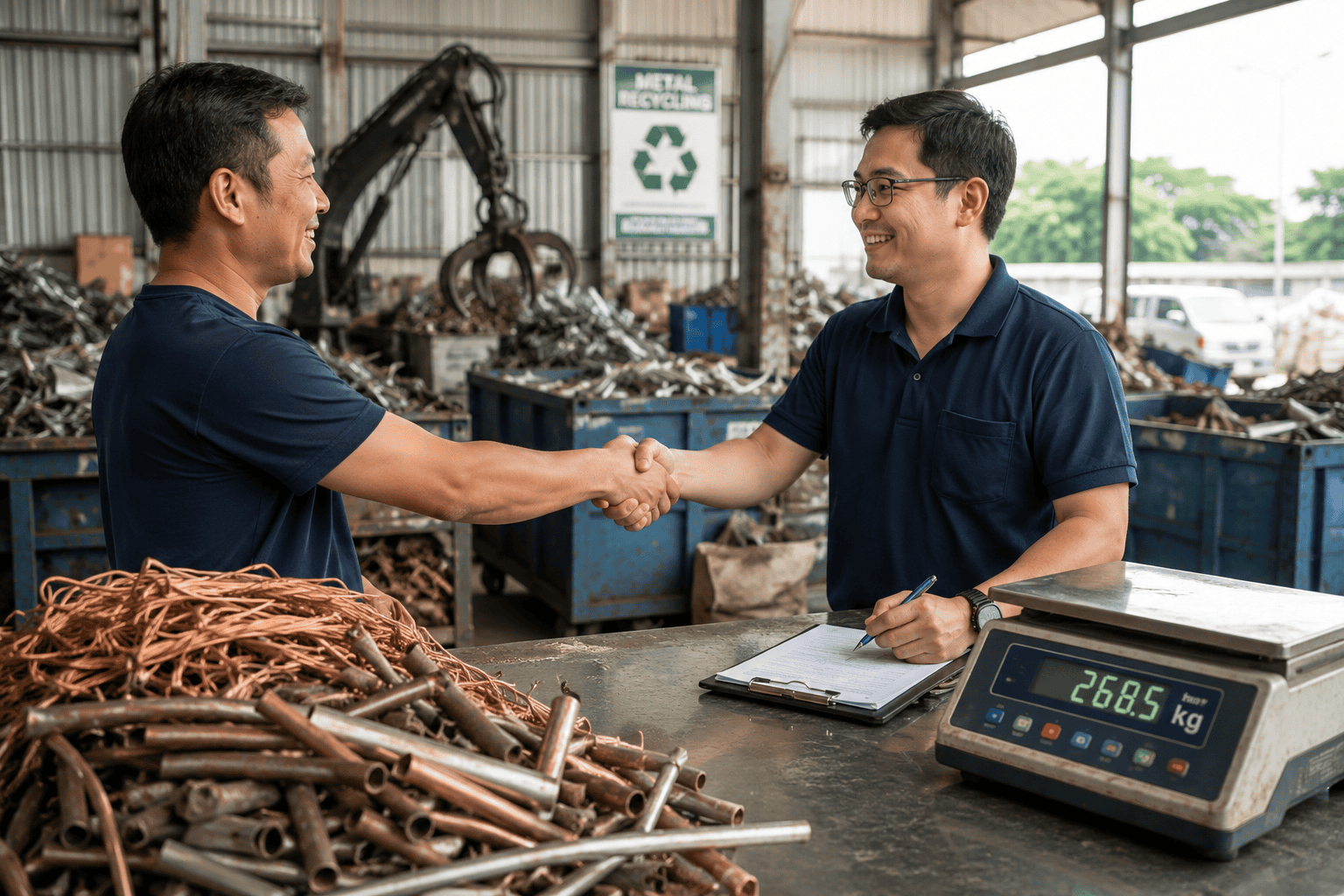
Your metal is weighed on calibrated scales. The dealer will inspect and assign a grade — clean, mixed, or contaminated — which determines the final per-kg rate. You should be present for this step.
5. Review the weighment ticket
Before payment, review the ticket for metal type, weight, grade, and rate. Query anything that does not match what was discussed.
6. Collect payment
Payment is made on the spot, typically in cash, with a receipt issued. For regular or high-volume sellers, payment terms may be discussed in advance.
Drop-Off vs. Bulk Collection: Which Is Right for You?
Drop-off
suits individuals, small businesses, and one-off clearances where the volume is manageable and transport is not an issue. You bring the scrap to the yard, it is weighed and graded, and you are paid immediately.
Bulk collection
is arranged by the dealer and is the better option for:
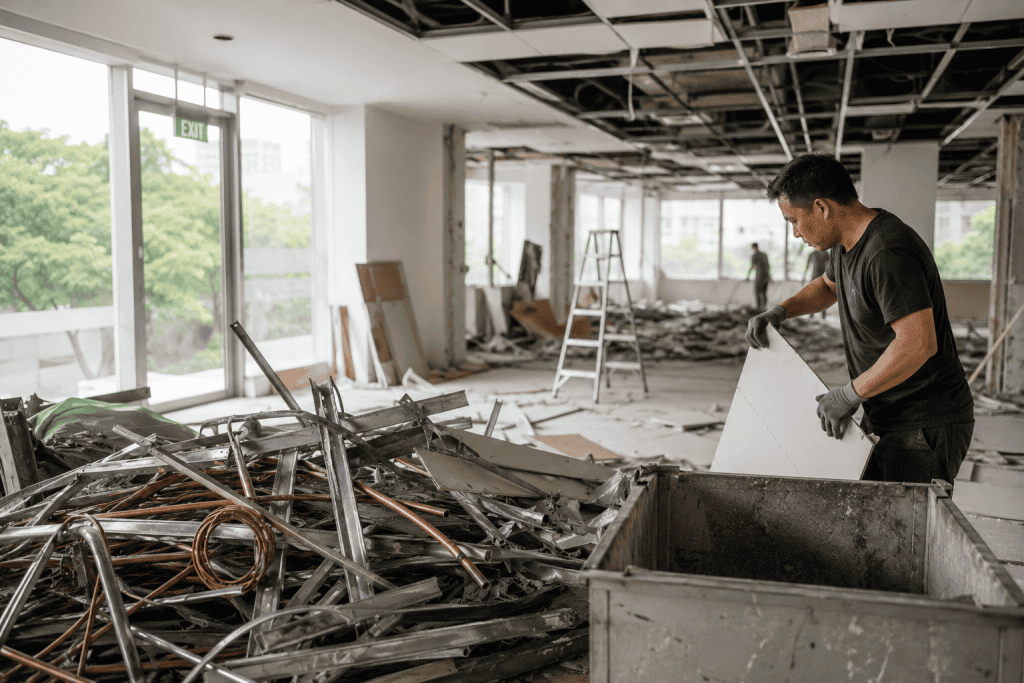
- Contractors clearing renovation or demolition scrap
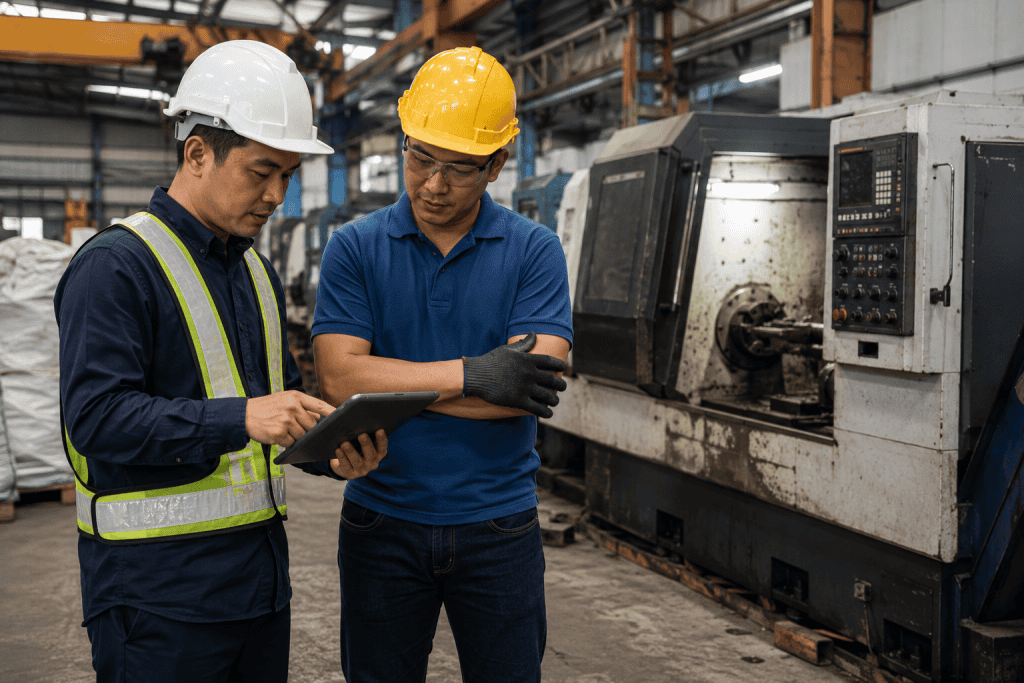
- Factories and warehouses with accumulated metal waste
- Businesses undergoing office or equipment clearouts
- Situations where transporting the scrap would require multiple trips or a hired lorry
At Choon Sheng Hardware, we arrange on-site collection for higher-volume loads across Singapore. We come to your location, load the scrap, and pay on the spot — eliminating transport cost and logistical effort on your end.
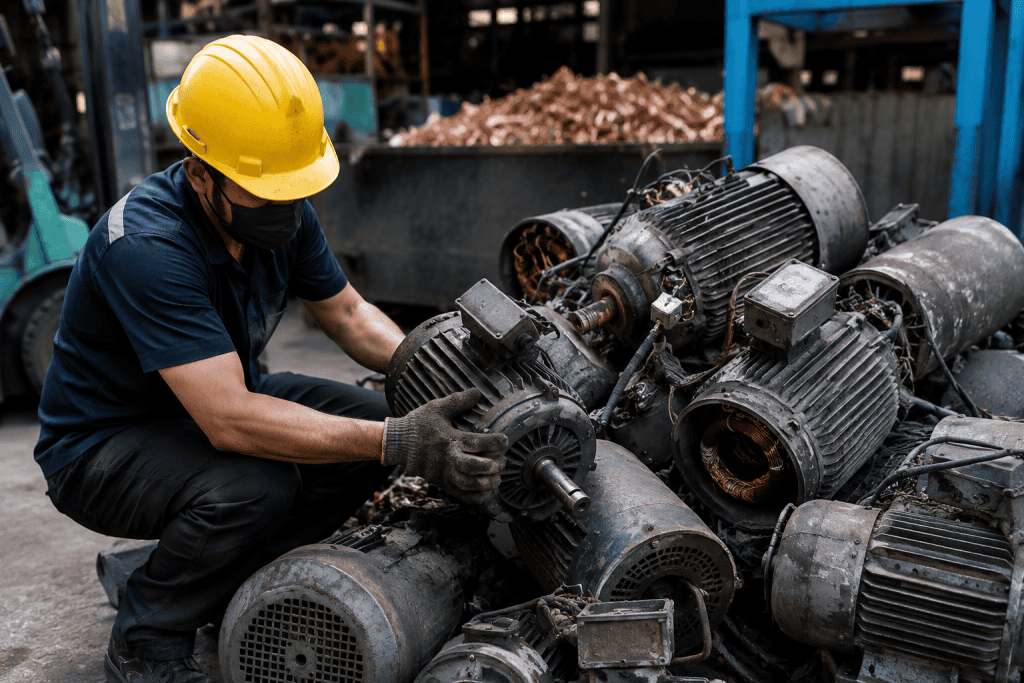
Also Read: Sell Industrial Motors Singapore: Get the Best Scrap Value (2026 Guide)
Where to Sell Your Scrap Metals? Professional Scrap Metal Dealer in Singapore
Selling scrap metal in Singapore is straightforward when you know what to expect. Identify your metals, sort them by type, bring valid identification, and work with a licensed dealer who weighs transparently and pays promptly.
If you are ready to sell, Choon Sheng Hardware Trading Pte Ltd is a fully NEA-licensed scrap metal dealer at 61 Kaki Bukit Avenue 1, #01-09, Shun Li Industrial Park. We offer competitive rates across copper, aluminium, stainless steel, brass, iron, cables, and mixed metal items — with transparent weighing, clear grade classification, and prompt payment on every transaction.
For bulk loads, we arrange on-site collection across Singapore so you save on transport and time. Not sure what you have? Bring a sample or a photo and our team will identify and quote on the spot. Contact us here!
Frequently Asked Questions
What metals are not accepted by scrap dealers in Singapore?
Most licensed dealers do not accept radioactive materials, asbestos-containing metal, or heavily contaminated hazardous waste. If you are unsure whether your load is acceptable, contact the dealer before transporting it.
Is there a minimum weight or quantity to sell scrap metal?
Most scrap yards accept any quantity for drop-off, but on-site bulk collection is typically arranged for larger loads. Contact your dealer to confirm their minimum requirement for a collection pickup.
How long does the selling process take?
A standard drop-off transaction — weighment, grading, and payment — usually takes 15 to 30 minutes depending on the size and complexity of your load.
Can a company sell scrap metal, or is it only for individuals?
Both individuals and businesses can sell scrap metal in Singapore. For companies, the representative handling the transaction should bring a company authorisation letter alongside their personal identification.
Do scrap metal prices change daily?
Yes. Rates for non-ferrous metals like copper and brass track global commodity markets and can shift daily. Always check the current rate before loading your vehicle to avoid selling on a weak pricing day.