61 Kaki Bukit Ave 1, #01-09, Singapore 417943
 +65 6841 0661
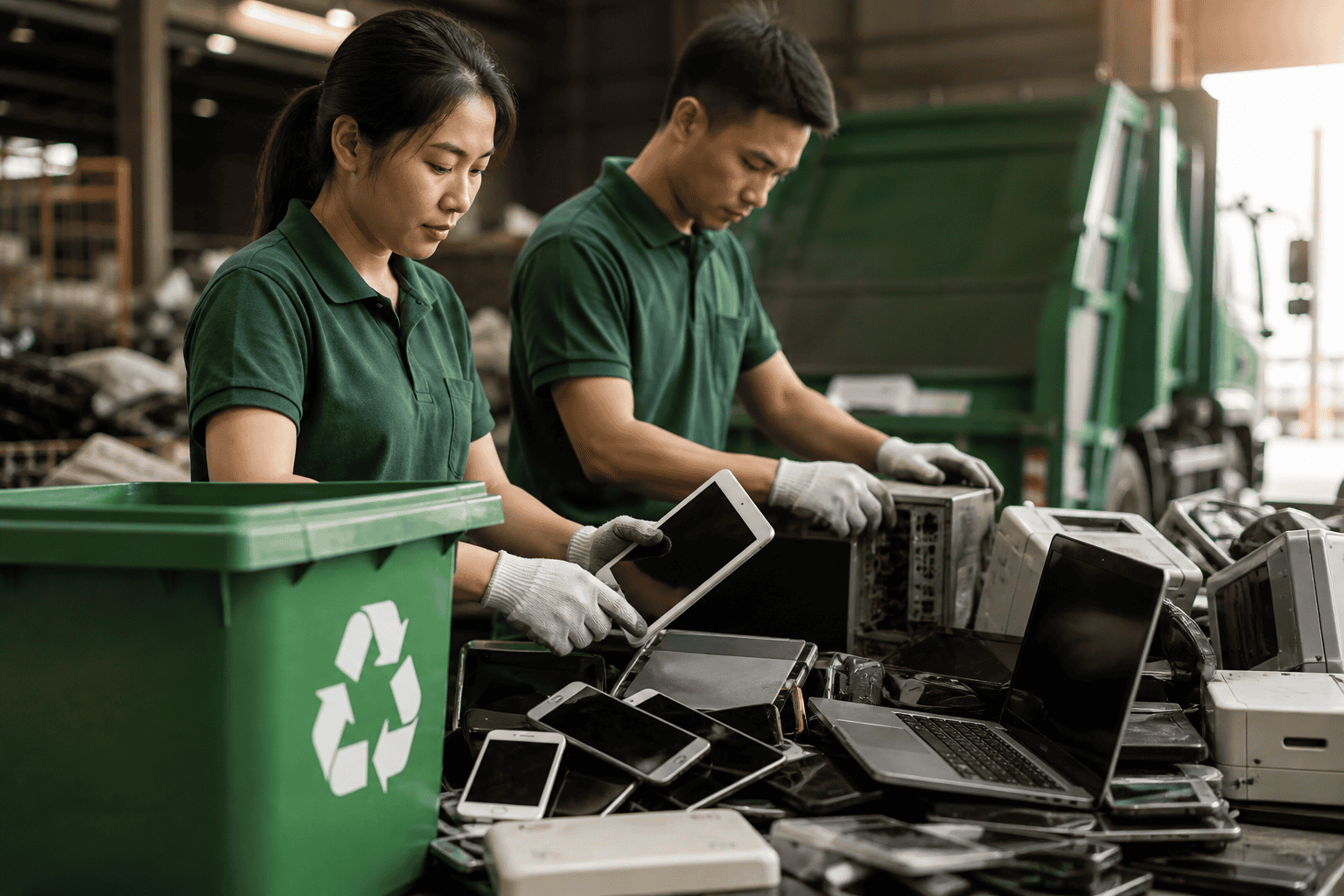
E-Waste Recycling Singapore: Complete Guide for Homes and Business
Find e-waste recycling in Singapore. Learn how to safely recycle old computers, mobile phones, and manage corporate IT asset disposal.
Your company has just replaced 20 laptops, and the disposal clause says old devices must be wiped before handover.
At home, there’s a drawer full of unused phones, cables, and a broken printer. The question isn’t only where to put them — but whether they can be dropped in a bin, returned to a retailer, or collected securely. Knowing the right disposal route helps avoid mistakes and keeps your data protected.
The Importance of Proper Electronic Waste Disposal
Electronic waste contains both valuable and potentially harmful components, such as batteries and circuit boards. In Singapore, disposal should follow the guidelines set by the National Environment Agency (NEA) under the Extended Producer Responsibility framework.
For individuals, the focus is on safe and convenient recycling. For businesses, the stakes are higher, as devices may contain sensitive data like customer information or internal records. Proper handling, including secure data removal, should always be completed before recycling begins.
If you are looking for a trusted and accessible option, Choon Sheng Hardware offers a convenient drop-off service for old electronics, making it easier for both households and businesses to dispose of their devices responsibly without having to travel far or navigate complex processes.
Where to Recycle Electronics in Singapore
Public E-Waste Recycling Bins and Collection Points
The simplest starting point for household e-waste is a public collection point. These are located at neighbourhood areas, community spaces, and selected retail locations. Common accepted items include small electronics, phones, chargers, and compact devices.
- Check the nearest collection points before travelling, especially if carrying multiple items.
- Follow the posted instructions at clearly marked e-waste recycling bins.
- Keep items dry and intact so they can be sorted safely.
- Remove SIM cards, memory cards, or removable storage before dropping off.
For bulky items, bin disposal is usually not suitable. Larger appliances or office equipment may require scheduled drop-off or collection by a recycling service provider.
Retailer Take-Back and Trade-In Programs
Many retailers offer take-back or trade-in options when you purchase a replacement device — often the easiest route for old phones, tablets, laptops, and small appliances. In some cases, the retailer accepts the old item at the point of sale or arranges collection with the new delivery.
Before handing over a device, confirm whether data handling support is offered, whether a factory reset is required, and whether accessories should be included. Even non-working devices may be accepted through recycling services at participating shops.
Also Read: How to Close Down a Company in Singapore and Liquidate Your Assets
How to Recycle Electronic Safely
1. Mobile Phones and Tablets
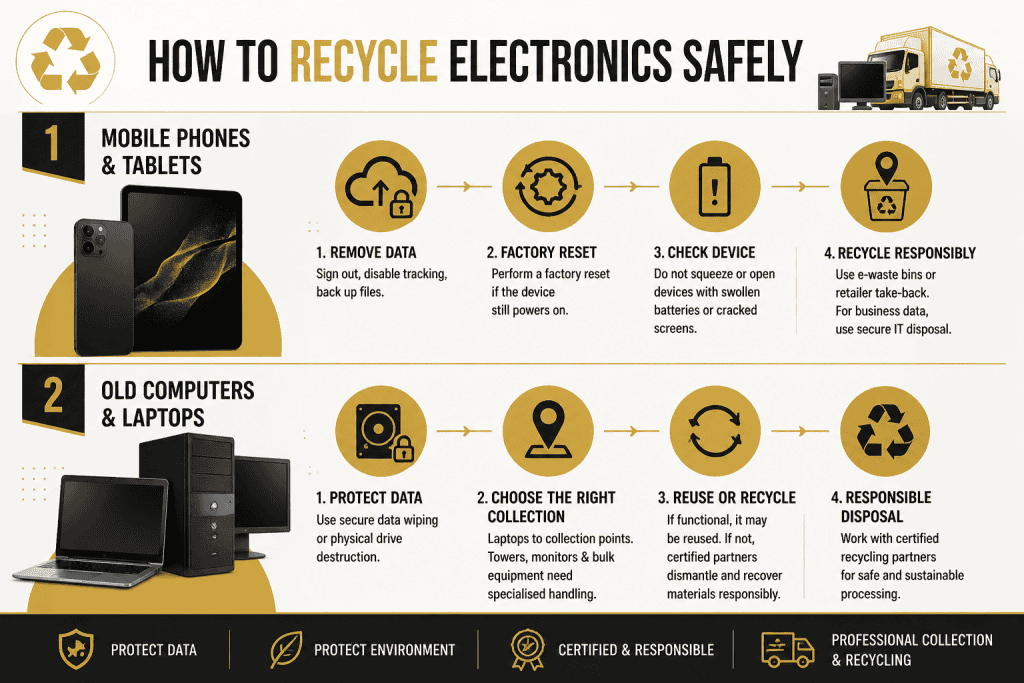
Start with data removal — sign out of cloud accounts, disable device tracking, back up files, then perform a factory reset if the device still powers on. Avoid squeezing or opening devices with swollen batteries or cracked screens.
Small phones and tablets are often accepted at public e-waste bins or retailer take-back counters. However, if the device holds business contacts, confidential messages, or two-factor authentication apps, treat it as part of a formal IT asset disposal process.
2. Old Computers and Laptops
The main concern when recycling computers is the storage drive, which may contain browser records, documents, project files, and saved passwords. Deleting files alone is not sufficient. Use secure data wiping or physical drive destruction — especially for company-owned equipment.
Smaller laptops may be accepted at selected collection points, but towers, monitors, and bulk office equipment usually need specialised handling. If the computer is still functional, some programmes allow reuse. If not, a certified recycling partner can dismantle it and recover materials responsibly.
| Item Category | Accepted in Public Bins? | Alternative Disposal Method |
|---|---|---|
| Mobile phones | Yes | Drop into approved e-waste bins or retailer take-back counters |
| Tablets | Yes | Public collection points or trade-in programmes |
| Laptops | Sometimes | Designated collection points or arranged pickup for larger quantities |
| Desktop computers | No | Collection through e-waste recycling or IT asset disposal provider |
| Printers and monitors | No | Specialist collection or retailer return where offered |
| Bulky appliances | No | Scheduled pickup or designated drop-off centre |
| Chargers, cables, earphones | Yes | Place in approved bins if accepted at the collection point |
Corporate E-Waste Management Solutions
Secure IT Asset Disposal in Singapore
For businesses, IT asset disposal in Singapore goes beyond simple recycling. Office devices often contain business records, login credentials, and client information , so disposal should include chain-of-custody controls, asset tagging, collection logs, and secure data destruction standards.
Professional ITAD services typically cover collection from offices, warehouses, or data centres, followed by audit-ready reporting. Some providers issue destruction certificates, asset reconciliation records, and recycling summaries — useful for internal governance and compliance with contractual obligations.
If your organisation uses equipment leases, vendor return clauses, or asset schedules, review those documents before disposal. A missed return deadline or incomplete wipe can create avoidable disputes.
Comprehensive Recycling Services for Businesses
Businesses rarely dispose of just one device. They often need one-off collections, office refresh clearances, or recurring recycling services. A good provider should manage mixed loads — computers, servers, monitors, networking gear, printers, and scrap metal components.
- On-site assessment and collection planning
- Secure transport and segregation of assets
- Certified data destruction options
- Reuse, refurbishment, or recycling routing where appropriate
- Reporting for sustainability and compliance records
This approach helps organisations reduce storage clutter, protect information, and manage end-of-life equipment in a controlled way. For multiple sites or large volumes, a scheduled pickup model is more efficient than ad hoc drop-offs.
| Feature | Consumer (B2C) | Corporate (B2B / ITAD) |
|---|---|---|
| Typical volume | One to a few devices at a time | Multiple units, batches, or full office refreshes |
| Data destruction | Factory reset or delete personal accounts | Secure wiping, shredding, or certified destruction required |
| Collection method | Drop-off at bins, collection points, or retailer counters | Scheduled pickup, on-site collection, or managed logistics |
| Compliance needs | Follow NEA guidance and safe disposal instructions | May require asset records, certificates, and approval tracking |
| Best fit | Home users disposing of small electronics | Companies needing secure disposal and reporting |
Tip: If you are unsure whether an item belongs in a public bin or needs specialised collection, check the provider’s acceptance list first. This avoids rejected drop-offs and saves time.
Also Read: Where to Sell Industrial Machines in Singapore
Dispose of Your E-Waste Responsibly with Choon Sheng Hardware
For businesses managing office clearances, equipment decommissioning, or IT asset disposal in Singapore, Choon Sheng Hardware provides reliable collection and recycling services for end-of-life equipment.
CS Hardware Specialising in scrap metals, including copper, aluminium, brass, stainless steel, cables, iron sheet plates, rebars, zinc, and machinery — they offer a fast, professional service that helps your business dispose of assets securely and responsibly.
With over 10 years of experience and more than 1,000 satisfied clients, Choon Sheng Hardware is a trusted partner for businesses across Singapore. Whether you need a one-off collection or a recurring recycling arrangement, their team is ready to support your needs.
Contact Choon Sheng Hardware today to request a quote and find the right disposal plan for your business. Contact Us, here!
Frequently Asked Questions
Where can I recycle old computers and mobile phones in Singapore?
You can recycle them at NEA-approved e-waste collection points, public recycling bins for small devices. You can also bring them to CS Hardware, which accepts old electronics for responsible recycling and disposal.
Are e-waste recycling bins free to use?
Yes, most public e-waste recycling bins in Singapore are free for household use. However, it is best to check the specific rules at each location.
How do I dispose of bulky electronic waste safely?
Bulky items should be handled through scheduled collection services, retailer return programs, or professional recycling providers rather than public bins.
What happens to e-waste after it is collected?
Collected e-waste is sent to licensed recycling facilities where it is dismantled and processed to recover valuable materials such as metals, plastics, and glass for reuse in manufacturing.